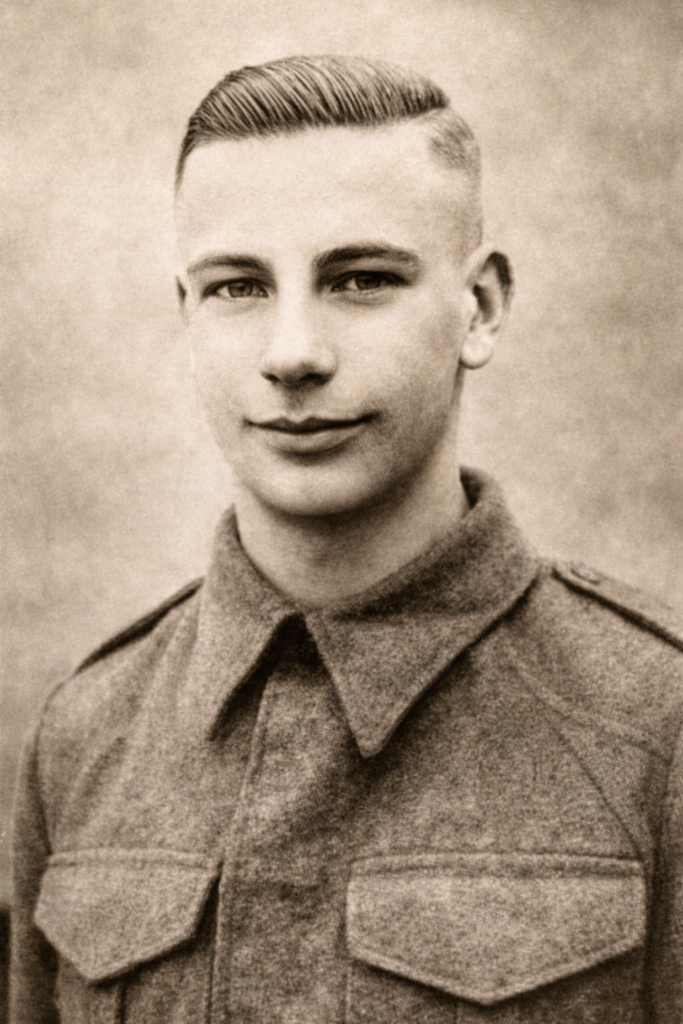
William John Clay

William John Clay
William John Clay was the son of Alfred and Ethel Grace Clay of Chidden Farm Cottages, Hambledon, and worked locally at Scotland Farm before entering the army. Like many young men of the village his civilian life was rooted in agricultural work, but he joined one of the oldest and most prestigious infantry regiments in the British Army, the Coldstream Guards.
The Guards regiments formed part of Britain’s elite infantry and were frequently committed to the most difficult assaults. The 3rd Battalion Coldstream Guards belonged to the Guards Brigade serving in the Italian campaign following the Allied landings in southern Italy in 1943. The advance north toward Rome soon met the powerful German defensive system known as the Gustav Line, a chain of fortified mountain positions built across the narrow Italian peninsula.
In November 1943 the Guards Brigade was ordered to attack strongly defended heights on the Camino massif, a mountain barrier dominating the approaches to the Liri valley and the road to Rome. The terrain was steep, rocky and exposed, offering the defenders commanding fields of fire. The fighting took place in cold autumn weather and required repeated infantry assaults supported by artillery and mortars at close range.
During these operations the 3rd Battalion Coldstream Guards successfully captured sections of the ridge but suffered heavy casualties in the process. It was during this fighting, on 15th November 1943, that Guardsman William Clay was killed aged twenty.
He is buried in Cassino War Cemetery in Italy, where many of those who died during the long struggle to break through to Rome are commemorated. The battle for the mountain positions around Cassino would continue for months after his death, becoming one of the hardest fought campaigns of the war.
William Clay’s service reflects the experience of many young infantrymen in Italy: close combat in mountainous terrain, far removed from the mechanised warfare often associated with the later stages of the conflict, and carried out under conditions as demanding as any faced during the war.