William Henry Warner

William Henry Warner
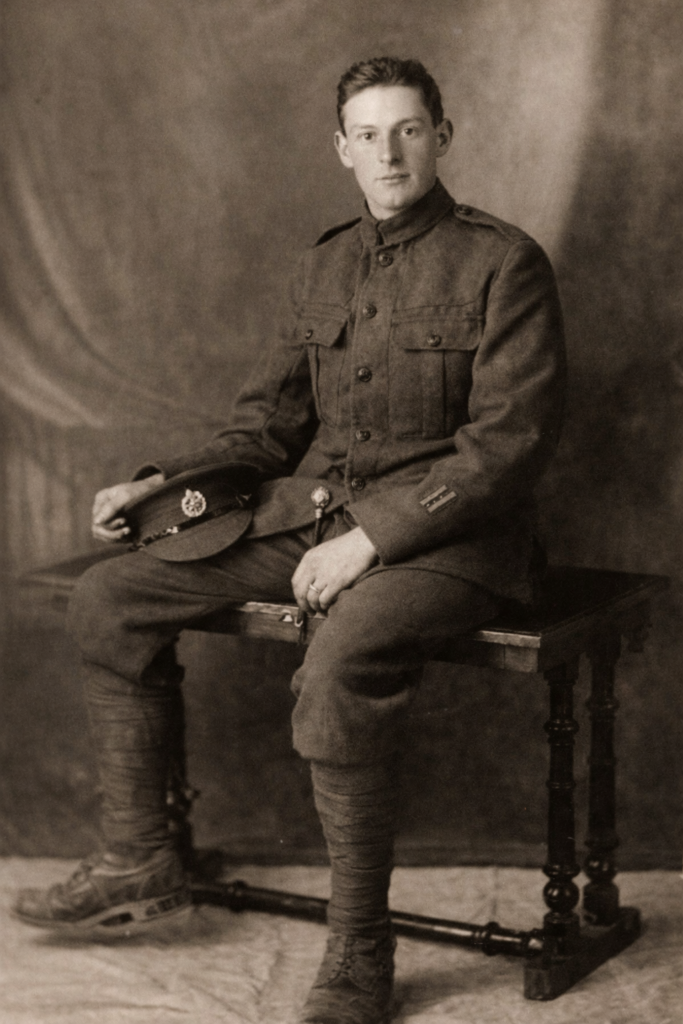
William Warner was born in Norfolk in 1895, the son of George and Ellen Warner. The family later moved south to Hambledon where his father worked as a gamekeeper, settling first at Glidden Farm and later at Chidden Holt. William grew up in the countryside and, like many boys raised in rural households, entered agricultural work at an early age. By 1911 he was employed as a shepherd, part of a family whose livelihood depended on the surrounding farmland and estates.
He enlisted during the war and served first with the Rifle Brigade, becoming Acting Corporal B/1325 in the 9th Battalion. Later he transferred to the Royal Scots Fusiliers as Private 41822 in the 2nd Battalion. By the autumn of 1918 his battalion was involved in the final Allied advance in Flanders, when British and Commonwealth forces pushed the German army back toward the Belgian frontier in the closing weeks of the war.
On 14th October 1918 he was killed during the fighting that followed the capture of the village of Dadizeele. The attack formed part of the advance that forced the German army into retreat only weeks before the Armistice. He was twenty-three years old.
He is buried in Dadizeele New British Cemetery in Belgium, where many of those who fell in the last battles of the war were later gathered into a single burial ground. His death came in the final month of the conflict, when victory was approaching but casualties were still heavy.
Though born in Norfolk, William Warner had grown up in Hambledon and was part of the village community before leaving for the army. His name remains among those commemorated there who did not live to see the end of the war.