High Street

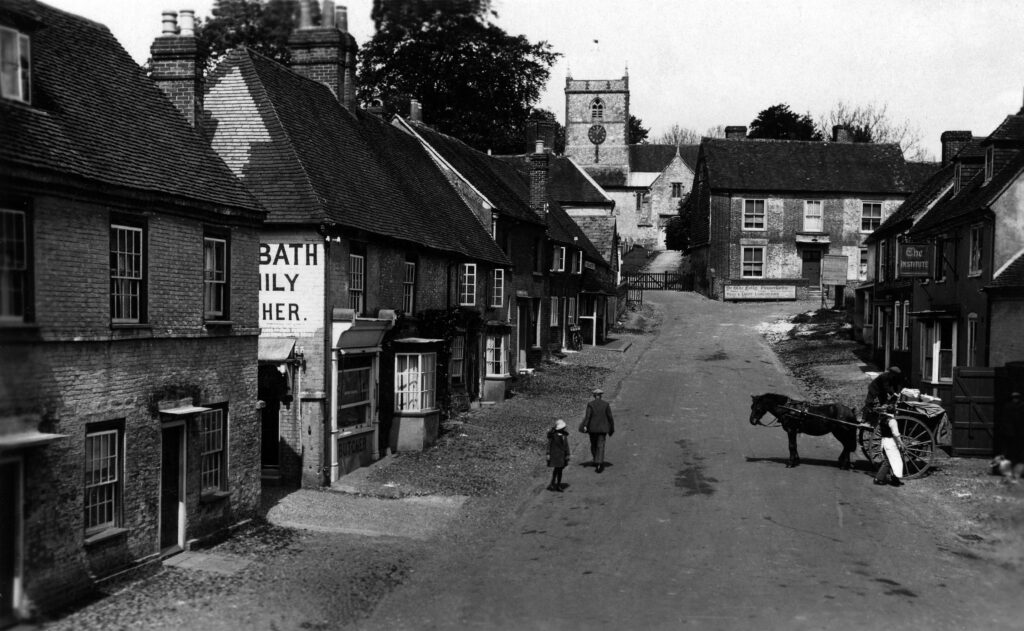
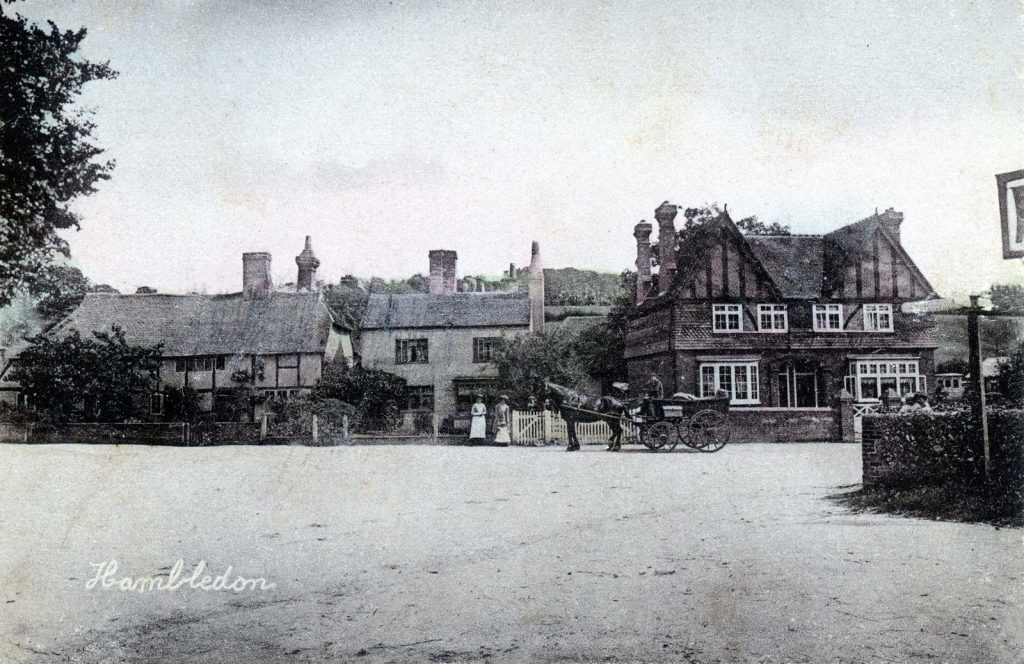
High Street is an iconic feature of Hambledon and runs north northwest from its junction with East Street, West Street and Speltham Hill. Looking north is an open view through the gate to the Church of St Peter & St Paul with its commanding bell tower.

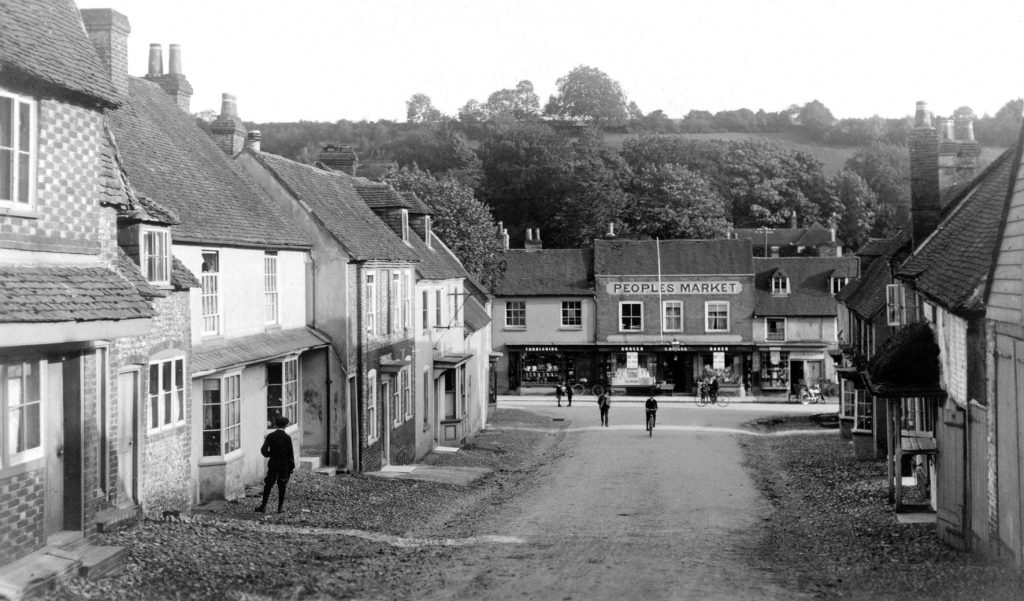
Photo: High Street looking south c1910

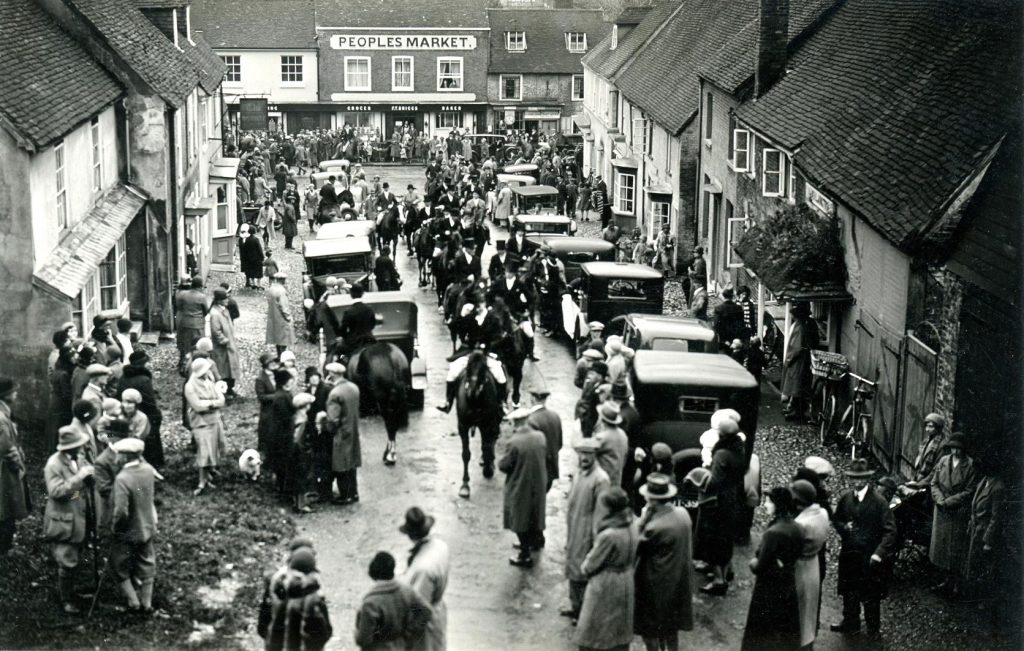
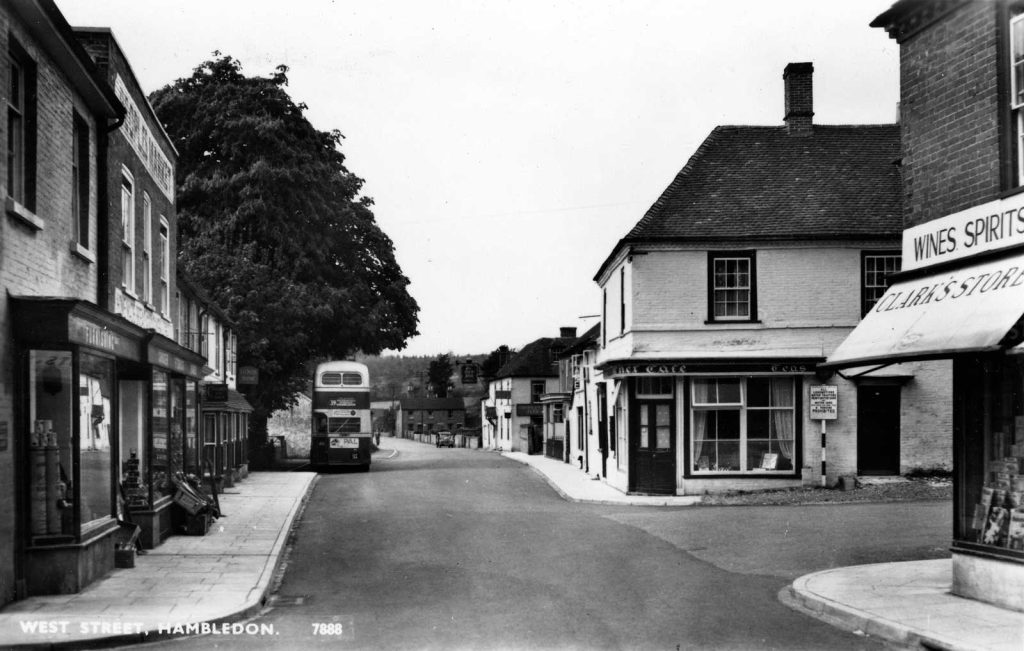
Looking down High Street the view is dominated by the broad frontage of People’s Market, actually on West Street. Until the early 1800s that view would have been to a much older building that fell down from disrepair and the adjacent buildings to the West abutted another very important structure – Manor Farm. With the George Inn at the crossroads corner opposite the Market, the historic economic and political hub of the village is clear to understand.

As maps and early photos show, High Street was the natural hub of the village and in common with some other villages was wider than it needed to be as a thoroughfare, thus providing communal, trading and ceremonial space. While we can speculate on what comprised the road surface before it was metalled, we can be confident about the road edges – no pavement but cobbled with large smooth flints that were hardly comfortable to walk on but were better than the muck of a packed earth roadway. And the cobbles are still there today.

The buildings of High Street today are nearly all residential and some of the oldest in the village. Over the years they housed businesses, workshops, butchers and bakers, an inn, a school and a working men’s institute.

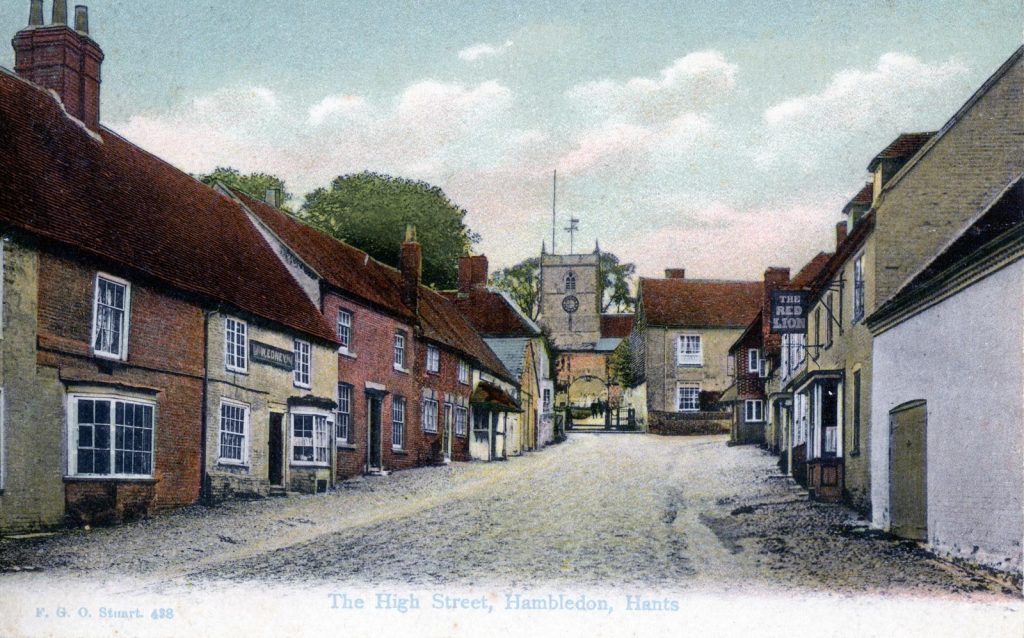
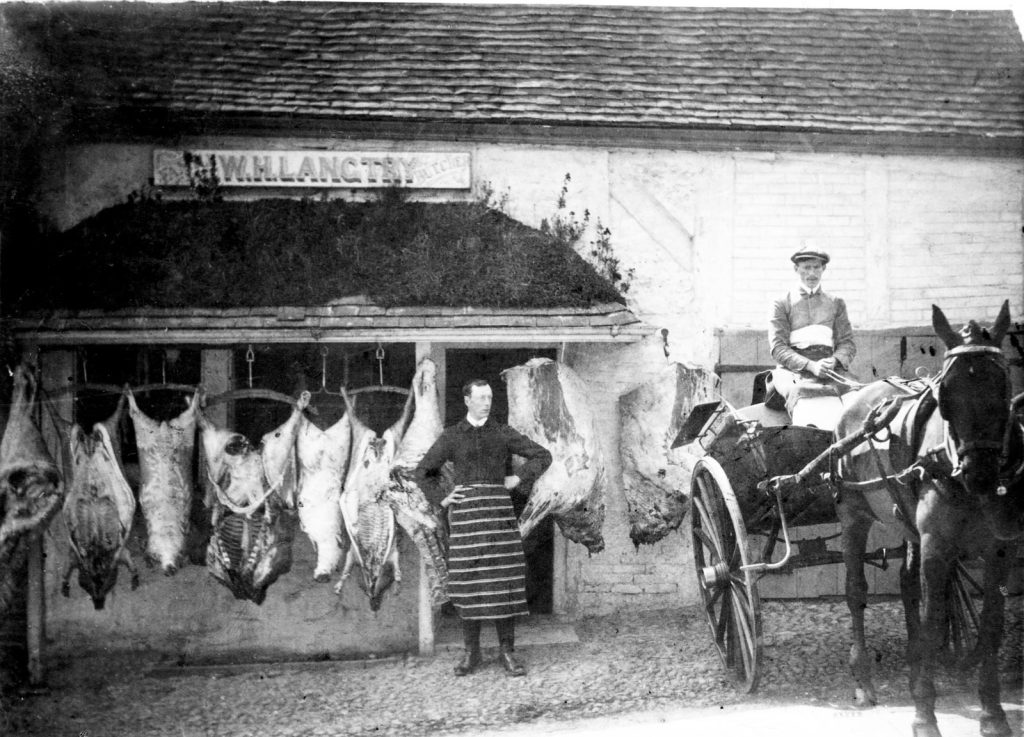
Photo: WH Langtry, butcher and seller of game c1895

Mr Langtry and his delivery cart pose outside his premises at the upper end of the High Street c1895 – still wonderfully preserved today but with less meat on display! Descendants of Mr Langtry continue to live in the village.

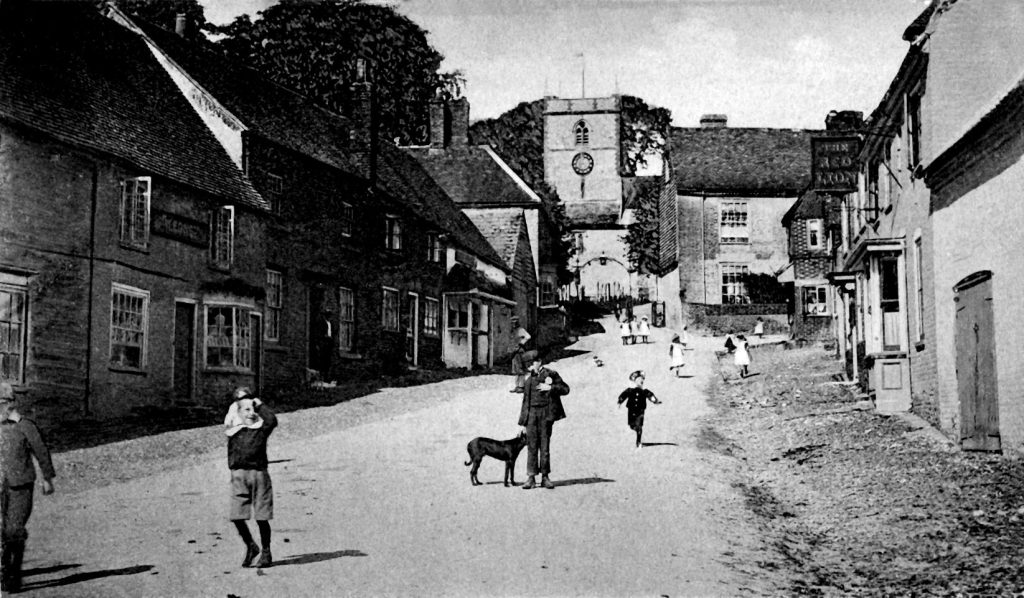
Photo : View north up High Street c1900 | The church looks down over the scene with Cutbath Butchers mid left. Mr Doughty, the proprietor of The Stores situated at High Street’s south east corner is, unloading the delivery cart into his bulk store. A sign on the wall at the top of the street advertises The Olde Folly Pleasure Gardens offering Teas and Light Luncheons.
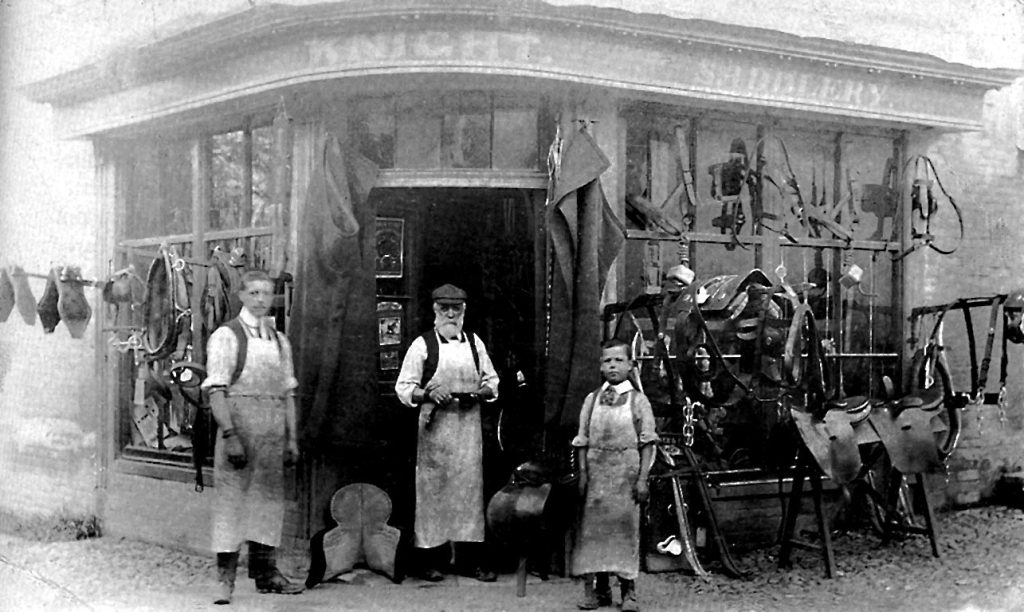
Photo: Mr W Knight stands between his two sons c1895 | Knights Saddlery traded from the southwest corner of the High Street and West Street. It is still known today as Knight’s Corner. In 1857 the property was owned by Edward Aburrow: he was the son of Hambledon Cricket Club member nicknamed ‘Curry’. In the 20c the premises became a popular café known as The Copper Kettle. It is now a private residence
Photo: View south down High Street c1930 | The Hambledon Hunt gathering, as was the tradition, on Boxing Day. The People’s Market is under the proprietorship of FT Briggs
Photo: An earlier view up High Street c.1900 showing top right the patterned brick building jutting out at the corner before it was demolished – part of what is now Hilltop. The Red Lion pub is mid right and opposite it is Edney’s bakery and stores.
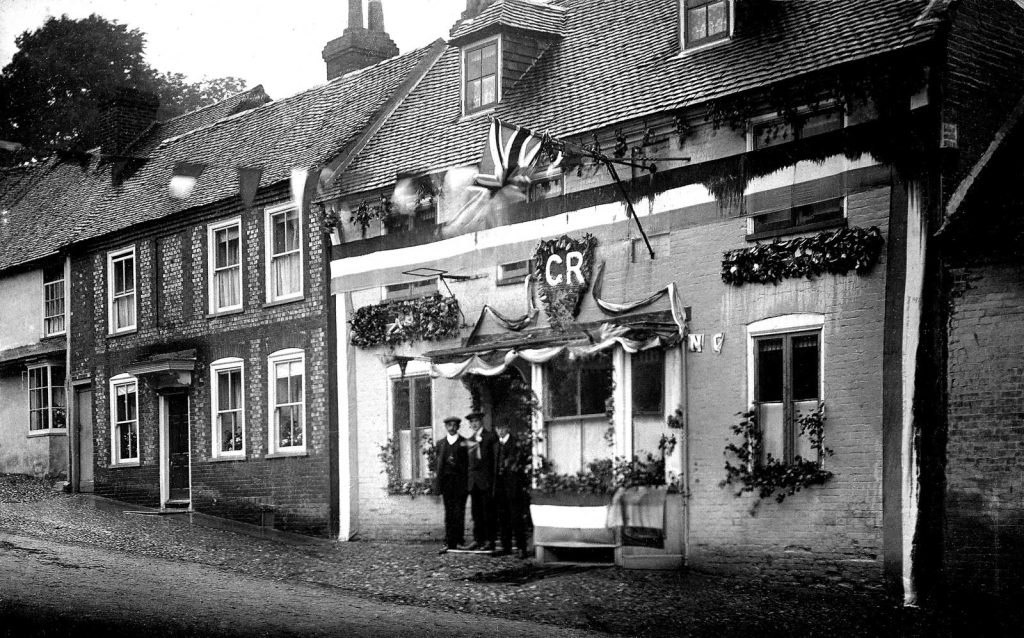
Photo: The Institute, previously the Red Lion pub, June 22, 1911 | The frontage is lavishly decked out for George V Coronation

Institutes were founded around the country in 19C. The Club and Institute Union (CIU) was founded in 1862 and still exists today. The History Group has no record as to whether the Hambledon Institute was part of this organisation and we would like to know more. Today this is a private residence, Tower House.

Next door up on High Street is Cobblestones

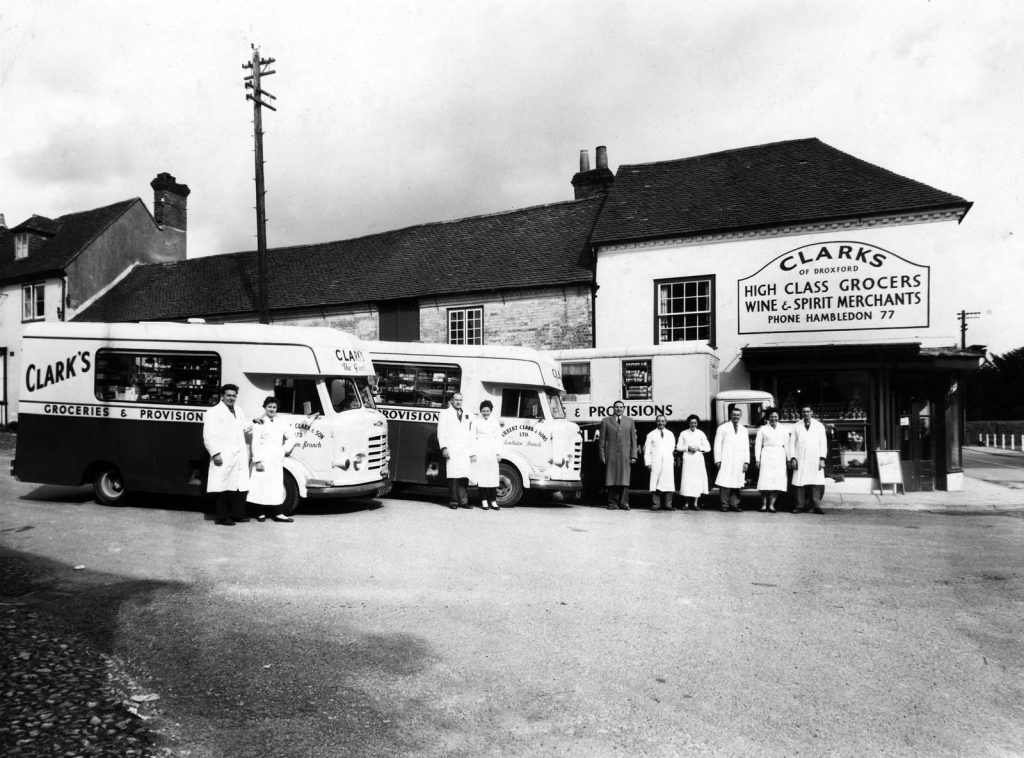
Photo: Clarks High St premises on the southeast corner of High Street and East Street c1960 | In addition to village stores, Clarks had a fleet of mobile shops and staff, displayed here. Clarks, originally based in Droxford, purchased The Stores from Mr Doughty in 1946. Tragically, both Mr Doughty’s sons died in World War II and with no one to take over the business he sold up and retired. Clarks moved their business into the Peoples Market c1969

Scroll to Top