East Street

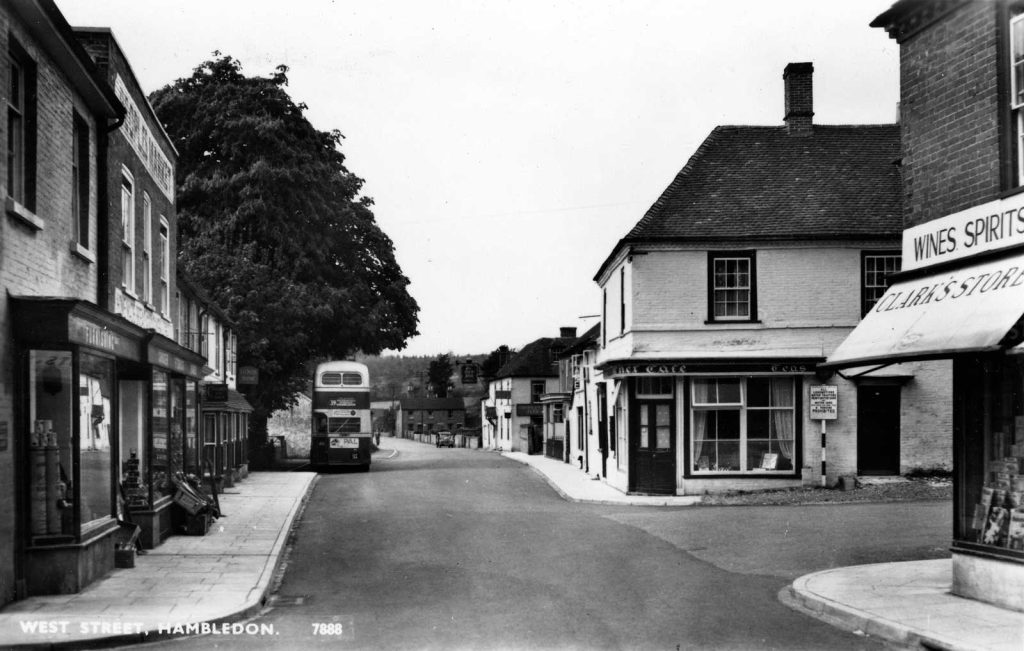
Photo: East Street, Hambledon | View looking along East St from the junction with High St and West St. This photo from the 1930s gives some insight to East Street’s importance: on the right we see a charabanc parked outside the George Hotel. The open air bus carries a sign ‘Meon Valley’ so is probably offering a day excursion with a stop at Hambledon where the George advertises ‘Parties Catered For’. Before the arrival of the railways, the George was a stage coach connection with the main road to London and Portsmouth and its regular stage coaches. So East Street and the George Hotel were pivotal points for visitors to Hambledon.

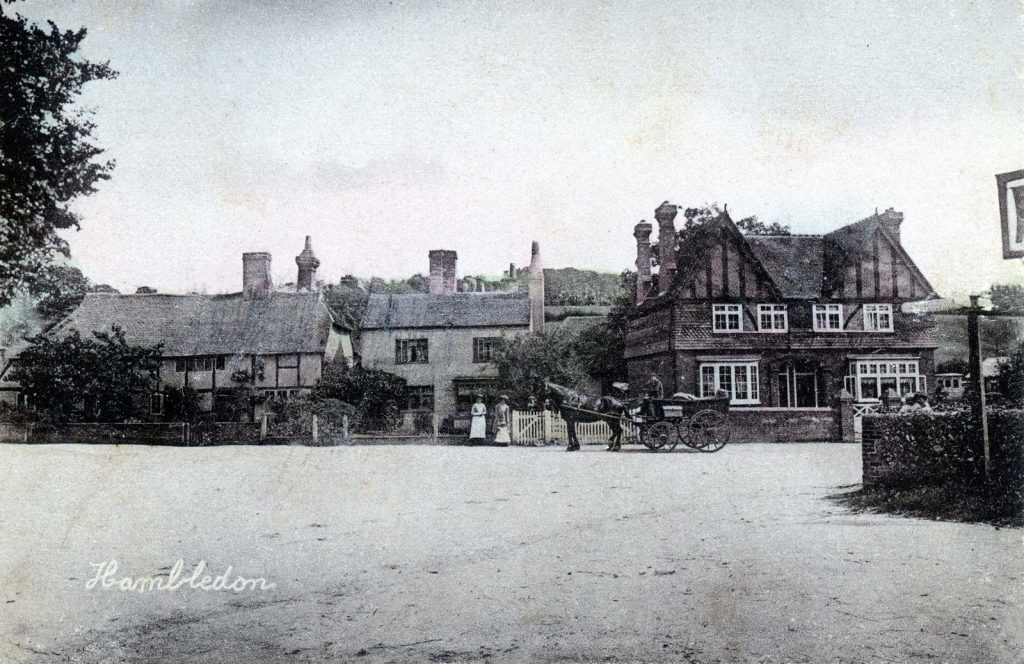
East Street, ‘a long straggling road’ in the words of Dora Goldsmith in 1908, runs from High Street as far as Park House and onwards to The Bat & Ball Public House which sits adjacent to Broadhalfpenny Down at the Parish Boundary with Clanfield. Although it is now now residential within the village boundary, East St has, in the past, encompassed every sort of house, business, profession and trade.

Buildings have evolved since at least the 15thC when some of the houses featured jettied upper stories reaching over the cobbled margin.  A major fire in 1726 tore through houses on its north side and was so devastating that countrywide collections were taken to help the village.  Historic photos tend to focus on the stretch nearest the village centre and here we’re taking a walk along the street then back to the George Hotel.

Nowadays, parked cars and traffic reduce the vintage feel of East St and there has been much change since the 18thC fire including addition of some Georgian style facades – said by some to have been funded by the bounty earned by high-ranking naval officers and captains from such as the Napoleonic Wars.

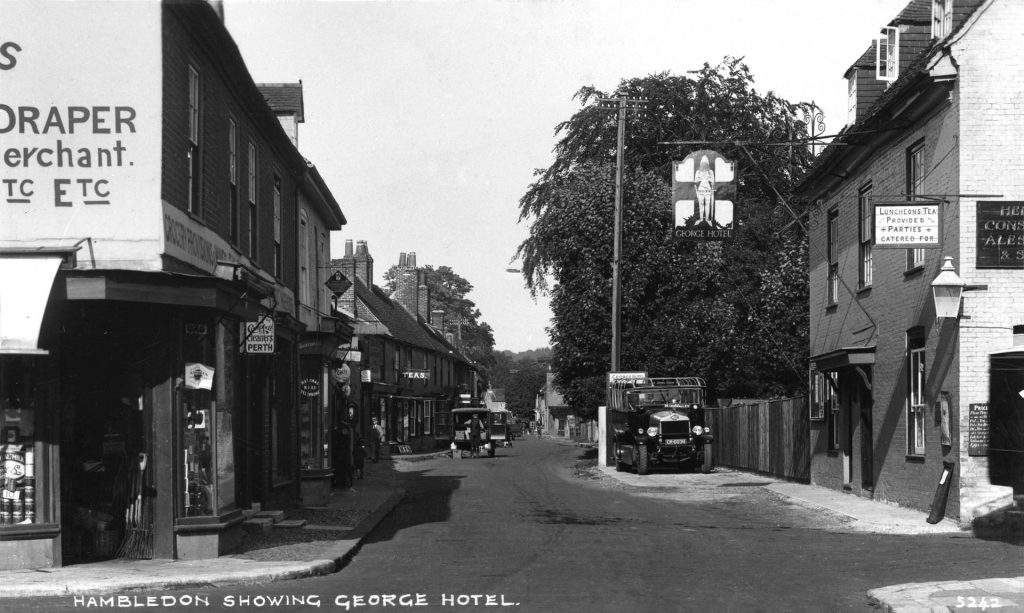
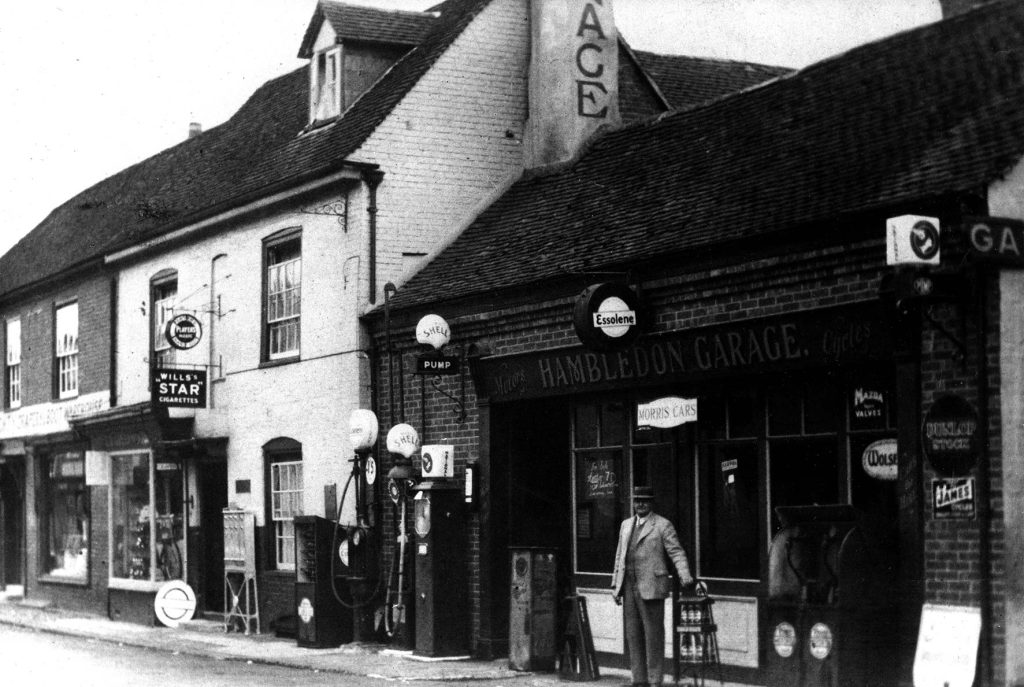
Photo: East Street, Hambledon | Yes, we had a garage! View looking northwest along East St c1936. AB Greenwood proprietor of the garage and petrol station pictured outside his establishment.

Greenwoods Garage, East Street | Yes, we had a garage! View looking northwest along East St c1936. AB Greenwood proprietor of the garage and petrol station pictured outside his establishment.In 1908 Walter Poole expanded his hairdressing and cycle agent business into motor repairs & petrol sales – keeping his barber’s shop!  In 1933 Walter sold to Alfred B Greenwood whose son, Tom, took the business over in 1951 closing it down in 1993. Link to Dot Greenwood’s story

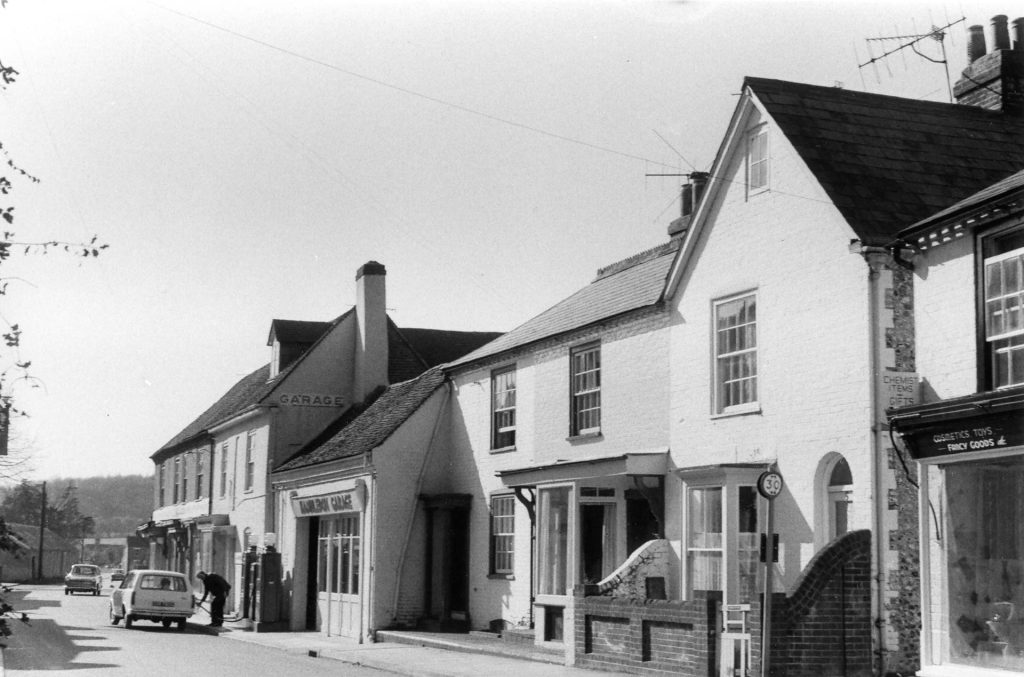
Photo: Greenwoods in the 1960s | Tom Greenwood fills up a Ford Mark II Cortina Estate c.1968. To the right is the frontage of what used to be called London House, a haberdashery occupied by Mrs H Matthews.
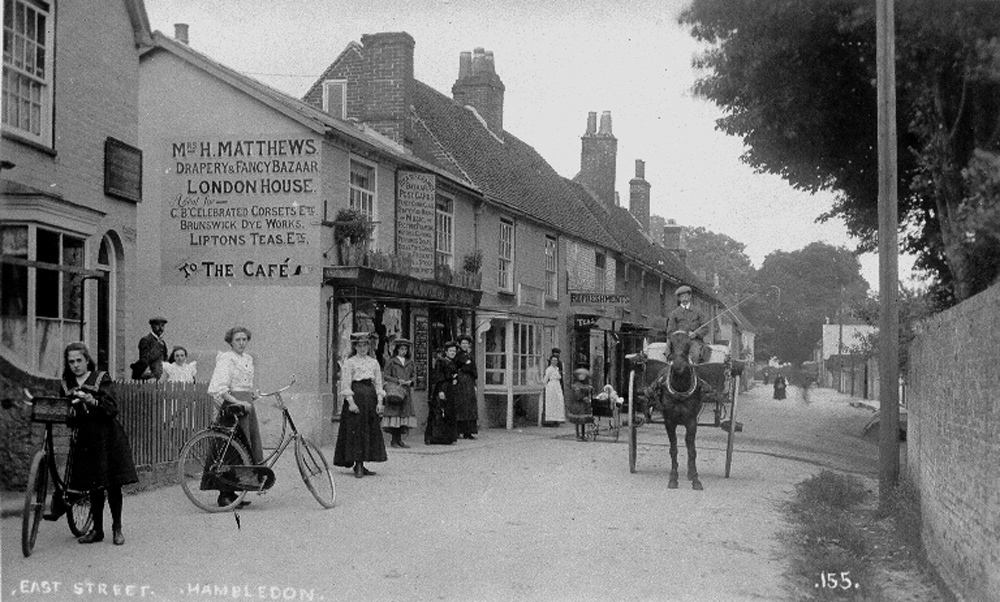
Photo: London House, East Street | London House c1900. Every need was catered for in this group – haberdashery, chemist, cobbler, surgery, pickled onions and The Café, pictured here in the early 1900s. Other trades along the street included builders, carters, blacksmith and, much later, a motorcycle workshop.

Further along East St was Mrs H Matthews’ London House selling corsets and drapery alongside gifts and post cards which Mrs Matthews published herself. Meeting the needs of passing trade and tourists was the Café Hall to the rear of London House; this was bought by the Women’s Institute in 1919 for their own and village events.  A Village Trust took it over in 1973 to be replaced when the current Village Hall was built in West Street in 1982.

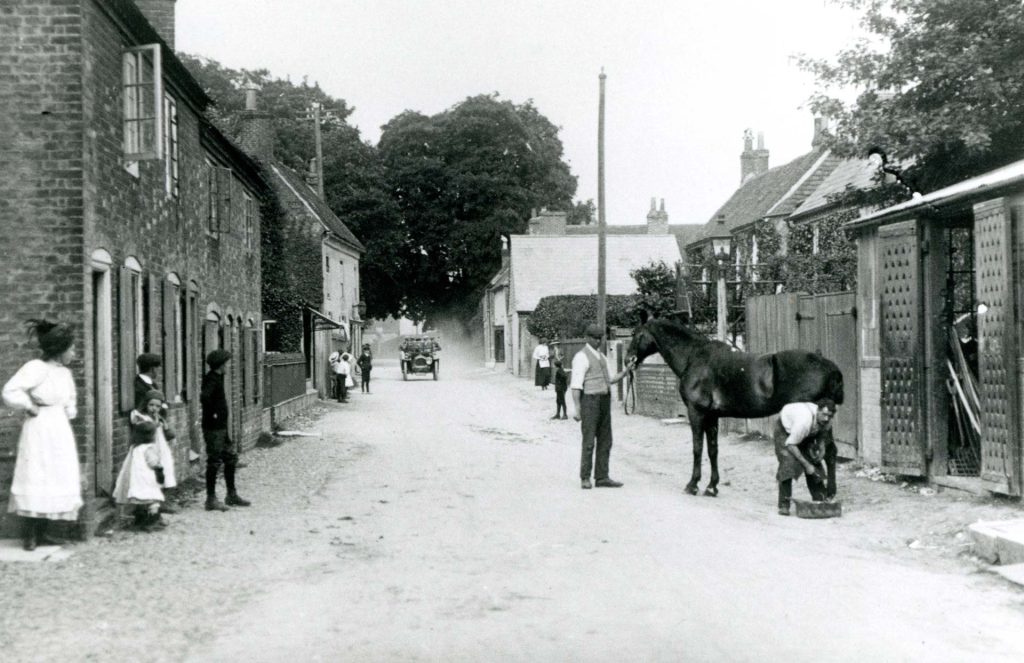
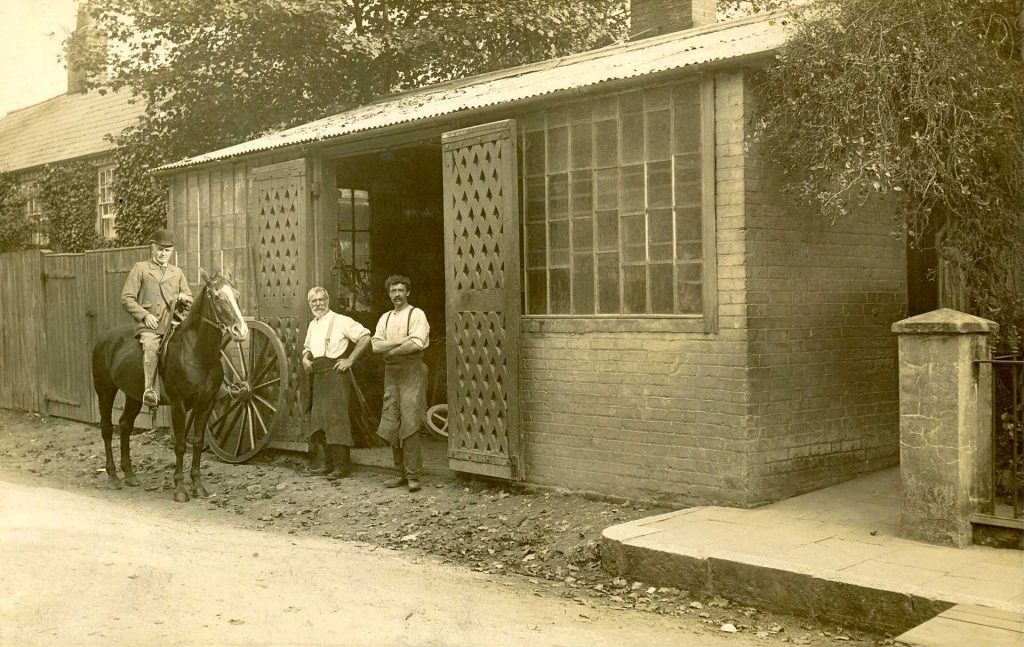
Photo: East Street, Farrier at work | Looking east along East St c1910 where the future roars towards the village centre – a horseless carriage carries 5 passengers in a cloud of dust. Fred Macey is seen with Jim Bucksey in front of his forge. Note the street lamp and flag pole located outside the Court House.
Photo: Macey’s Forge | Macey’s Forge stood opposite a terrace of four cottages which were demolished in the 1950’s to make room for today’s Forge House which replaced them. To the east of Macey’s Forge stood Blenheim and beyond that, The Court House.
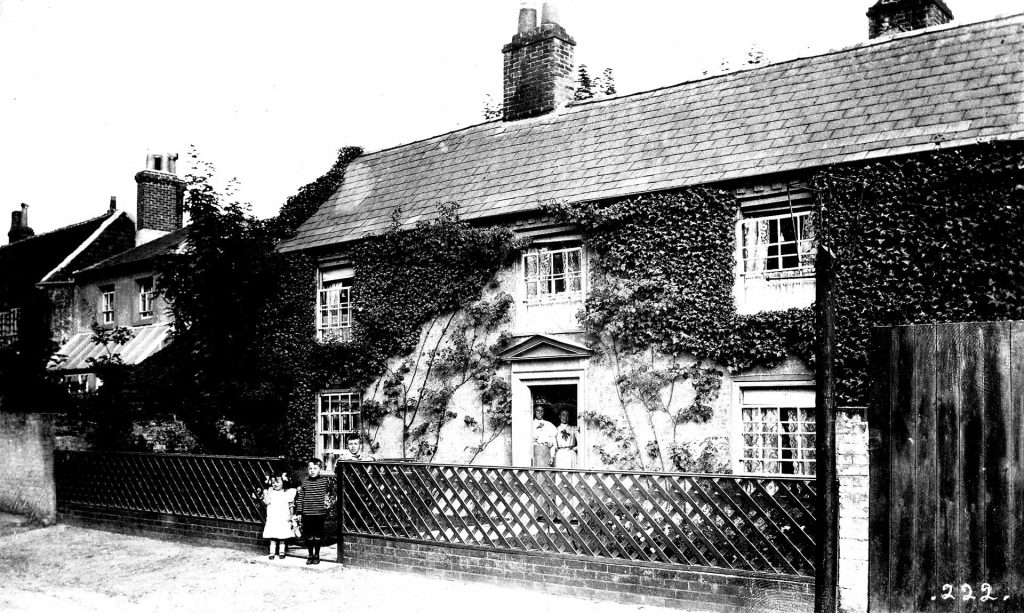
Photo: Blenheim | Looking south across East St to Blenheim House c1905. This graceful residence may have been a guest house in Edwardian times and looks much the same today. The photo is from one of Mrs H Matthews post cards.
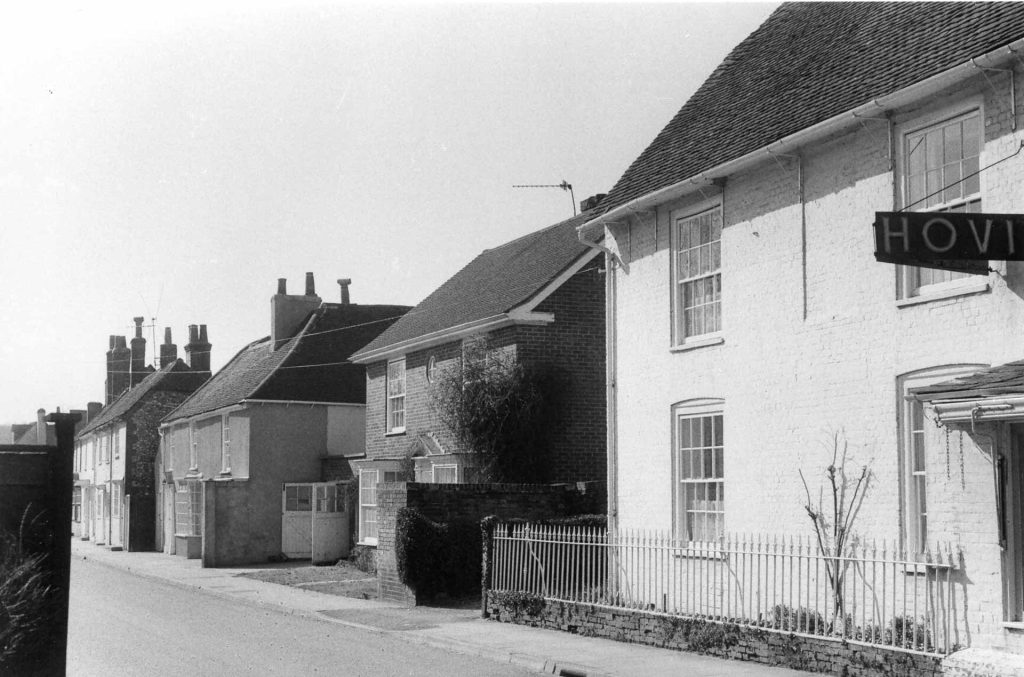
Photo: Beames Bakery, Hazeldene, East Street | View c.1960 looking northwest to Beames bakery housed in Hazeldene, Forge House to its left.
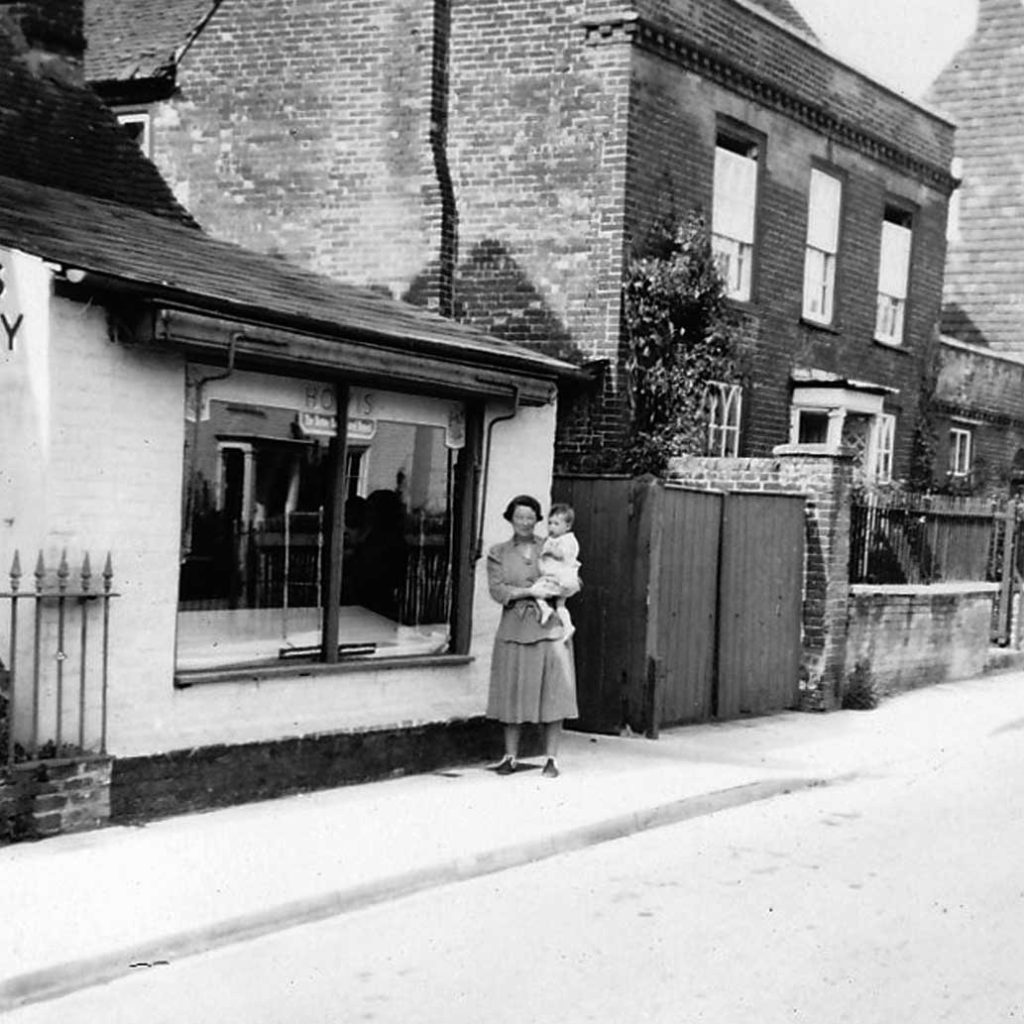
Photo: Beames Bakery, Hazeldene, East Street | Jean Beames holds granddaughter Isobel in front of the shop. Myrtle Bank, beyond shows the addition of a parapet to create a Georgian-style frontage.

Opposite Blenheim is Hazeldene, once housing a substantial commercial bakery – Beames, from 1951 until it closed in 1988 and run by Jean and Tom Beames. The house and shop date from 18C and were Grade II listed in 1967. The shop with its distinctive HOVIS sign remains a village landmark today.

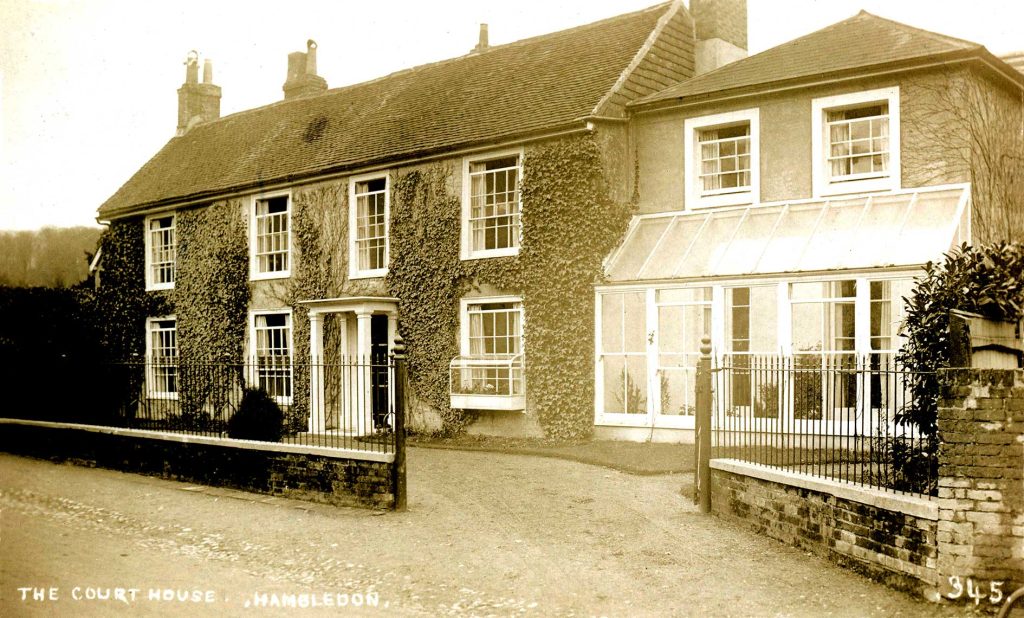
Photo: The Court House, East Street | The Court House, East St viewed looking south east c1905 – from a post card published by Mrs Matthews of London House.

Further east, next to Blenheim, is The Court House. Today it’s another elegant Georgian home; the secure cells in the basement testify to its name. The standing of the house and its occupants means it has often played a central role in village life as photographs in our archive demonstrate.

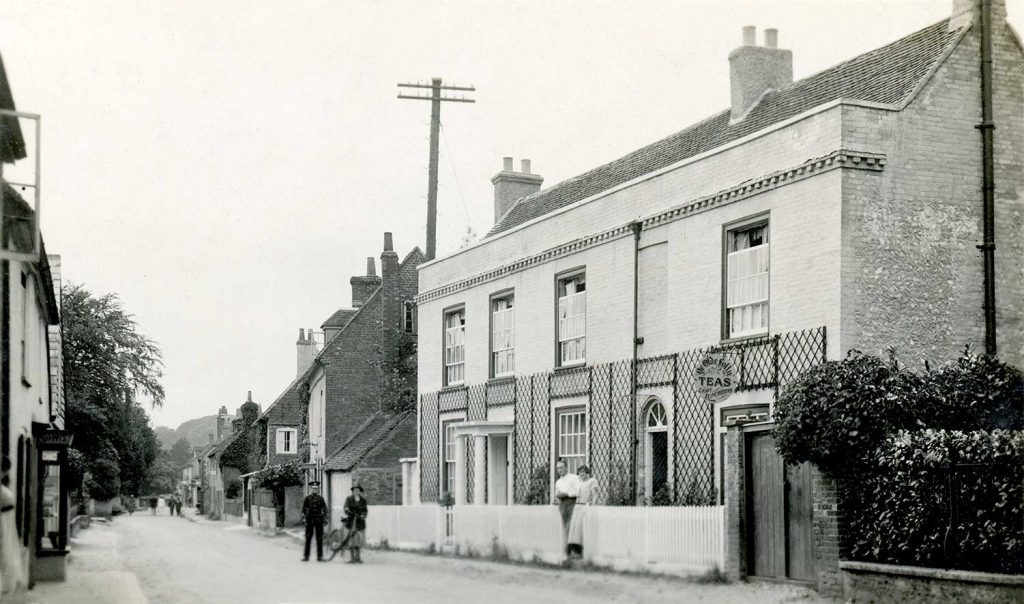
Photo: Olde Folly Tea Room at the Red House | Looking northwest to today’s Red House, its ‘Georgianised’ frontage lending an air of sobriety but appearances can be deceptive…

Further along East Street on the north side is the Red House. In the 1930’s this establishment was named Olde Folly Tea Room; it also served teas in the garden and the spacious indoor café ran tea dances for the village’s bright young things. Patrons from near and far entered the Tea Garden via Church Lane but the café and servants’ entrance was on East Street.  Villager Kath Graham remembered, as a youngster, standing by May’s sweet shop across the road and the excitement of watching people come and go.

Scroll to Top