David Greig Bryce
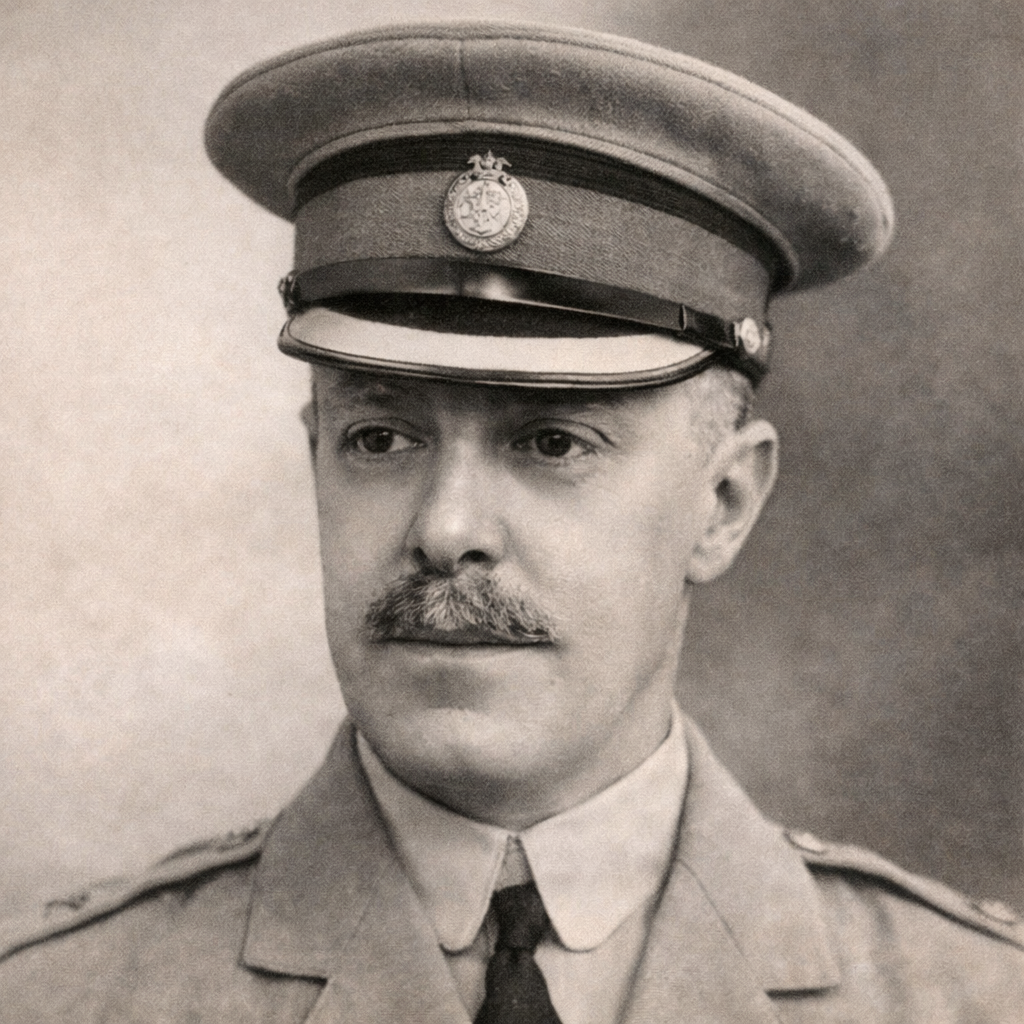
David Greig Bryce
David Greig Bryce was born on 18th January 1869 in Edinburgh, the son of Archibald Hamilton Bryce and Mary Ferguson. His life belonged to a generation of professional officers shaped by the height of the British Empire – men whose careers unfolded not in a single campaign but across continents and climates. Unlike many commemorated on village memorials, soldiering was not an interruption to his life but its defining structure, a vocation begun in youth and followed for decades.
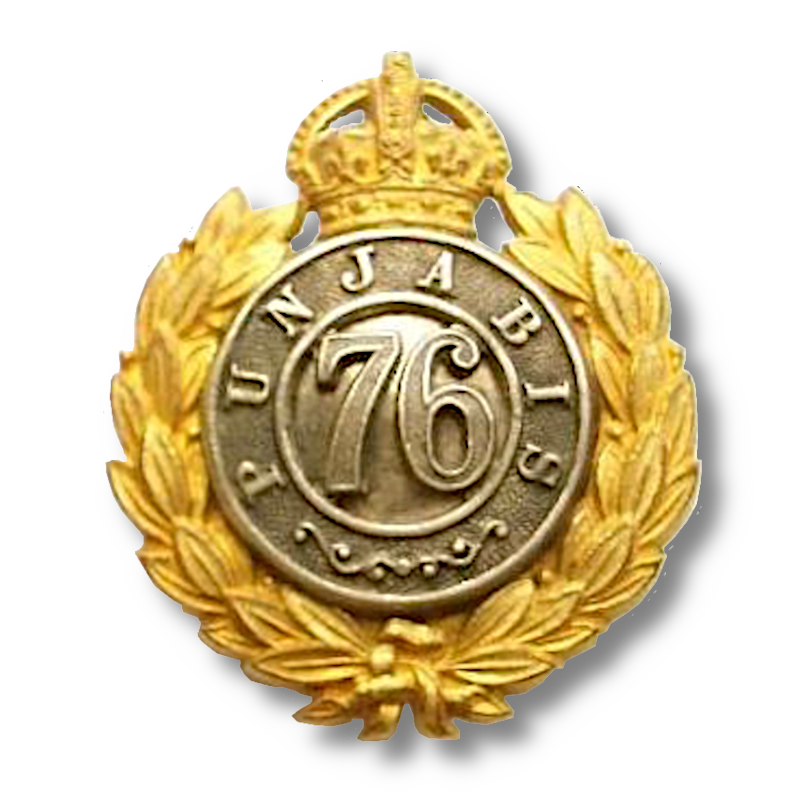
He received his commission as a Second Lieutenant on 28th June 1890, becoming Lieutenant on 7th March 1892, Captain on 28th June 1901 and Major on 28th June 1908. His early career began in the Lancashire Fusiliers before transferring into the Indian Army, where he served with the 76th Punjabis, part of the 6th (Poona) Division. Officers in these regiments lived closely among their men, commanding soldiers drawn largely from the Indian subcontinent while navigating language, culture and administration alongside military duties. The work demanded endurance as much as courage – long postings, harsh climates and responsibility for men far from Britain.
In 1896 he married Emeline Isabel Hamilton of Fairfield Cottage in Hambledon, linking his imperial career to the Hampshire parish that would later remember him. Though his service carried him across distant stations, his family ties remained rooted in the village community. Earlier in his career he had served with the Somaliland Field Force on 3rd February 1903, campaigning in difficult desert conditions against the forces of Mohammed Abdullah Hassan. These were not set-piece European battles but gruelling expeditions in extreme heat where disease and climate were constant enemies.
When the First World War began he was already an experienced officer. The war extended far beyond France, and India became a vast training and deployment base for campaigns such as Mesopotamia against the Ottoman Empire. Officers of the Indian Army bore heavy organisational burdens, preparing drafts and units for overseas service in difficult environments while coping with the strains of climate and logistics. In June 1915 Major Bryce suffered heat stroke and was invalided from active duty. His health never recovered; on 24th February 1916 he died of pneumonia in a military hospital in Cawnpore, India.
He was awarded the 1914-15 Star, the British War Medal and the Victory Medal in recognition of his wartime service. Though he died thousands of miles away, he was remembered both on memorials in India and in Hambledon itself. A family headstone in the churchyard of St Peter and St Paul – where his wife would later be buried – commemorates him locally, and a plaque inside the church preserves his name within the parish community.
His story differs from that of younger soldiers who perished suddenly in the trenches. Major Bryce’s war was the culmination of a lifetime of service – decades spent moving between imperial stations, leading men in difficult climates, and carrying responsibilities that wore down health long before a battlefield wound might. His death illustrates another reality of the First World War – that the empire’s armies were sustained not only by those who fell in combat, but by career officers whose strength was spent slowly in distant places. In Hambledon, his memorial stands not only for a single campaign, but for a lifetime devoted to soldiering across the breadth of the British Empire.