
Hambledon

Widely known to many as the Cradle of Cricket the village stretches along a valley and ancient riverbed in East Hampshire. For 3000 years there has been settlement here and the human footprint of history can still be discerned: Bronze Age remains, a Roman villa, a Saxon church and significant Norman and Medieval buildings – all set gem-like amid sweeping farmland with the sloping downs capped by splendid beech hangers.

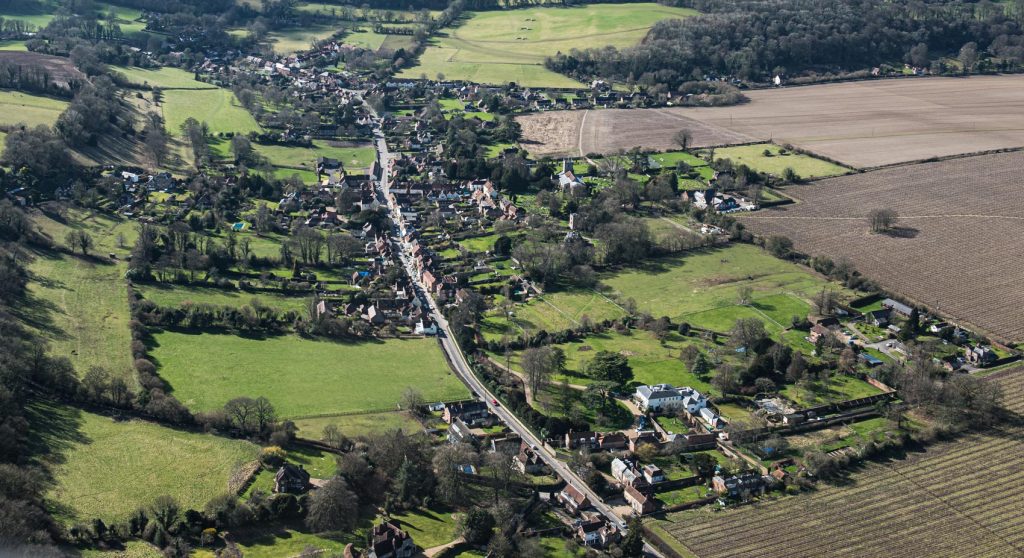
Photo: Aerial view of Hambledon looking West with East Street stretching centre. c2018. | This photograph shows Hambledon’s rural environment with much green space retained amid the buildings.

The Village has a clear and natural centre at the crossroads where High Street, East Street, Speltham Hill and West Street meet. Usually dominated by parked cars nowadays, it’s easy to overlook that the High Street, the first part of East St, Speltham Hill and Upper West Street are somewhat wider than they need to be, indicating that the village centre was an open space for gathering, trade and ceremony.

Visitors are most likely to arrive at this point from either East Street or West Street and they will pass a great variety of homes and buildings from different eras with some modern construction but mainly traditional looking cottages and some grander houses.

There are many listed buildings and at first glance you may think you are looking at a mainly Georgian or Victorian village-scape. Although we can try to imagine a mediaeval version of the village, its history goes back much farther.

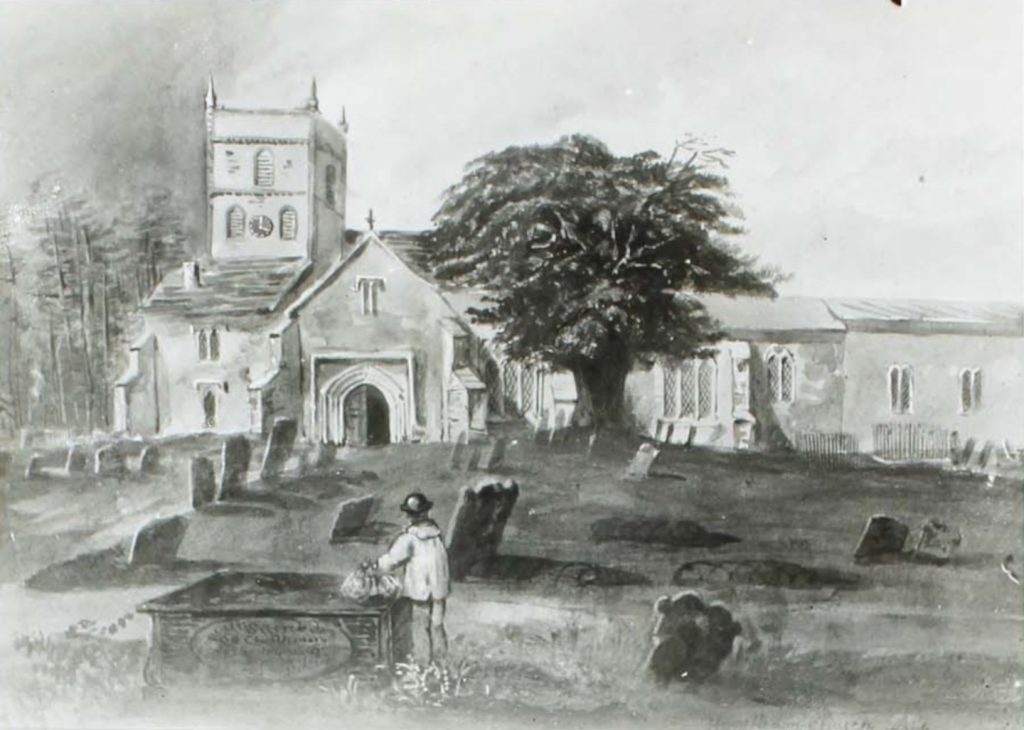
However this website will present the changing scenes from prehistoric remains through early Roman and axon developments to the great steps taken in the Norman era as the Church of St Peter and St Paul that crowned the High Street expanded from a tiny Saxon building to a much grander Norman edifice.

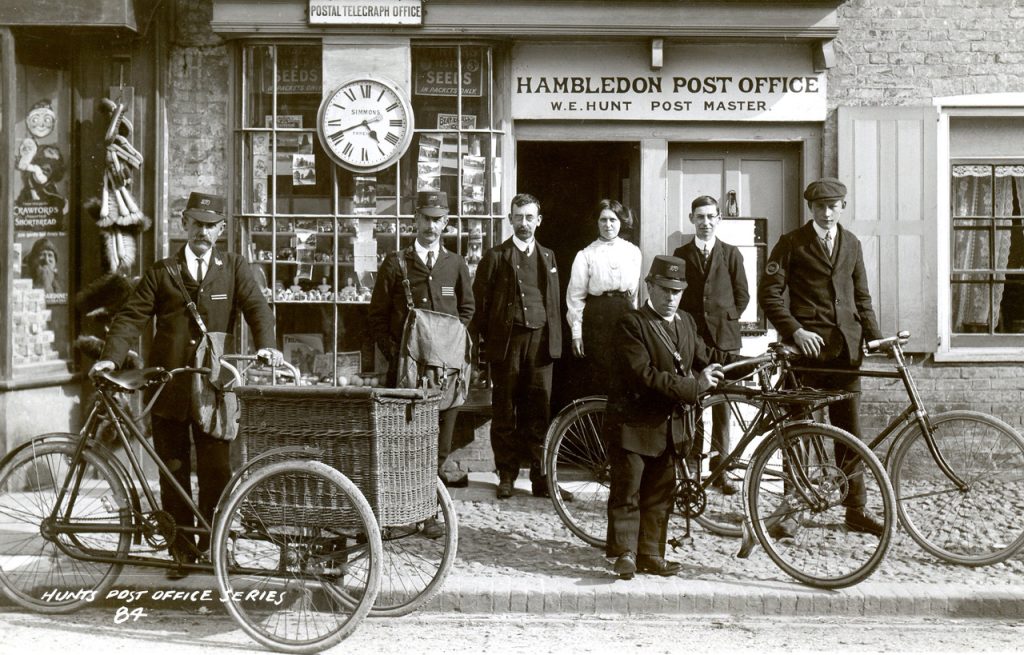
Photo: Hambledon Post Office, the Postmaster and his staff c1906 | Pictured here is the village Post Office with Postmaster Mr William Ernest Hunt (centre), responsible for many of our vintage views of Hambledon with his wife and son and postal staff c1906. Left Mr Henry Bennett with tricycle who was the postman, also in the photo his son Henry George Bennett the post office messenger. The facade of the old post office is little changed today.

Earliest Days

The first evidence of settlement at Hambledon is the Bronze Age barrows scattered around the parish; while there is little trace of their successors, the Iron Age…
Read More

The Middle Ages

Domesday Book mentions only two of the holdings in Hambledon, but figures given suggest quite a prosperous community. William I seized all church lands but in…
Read More

Modern Times

The plentiful aquifer water of Hambledon supported two breweries in the 19thC, the better known being Hartridge & Sons, formerly Alliance Brewery, which was acquired by Francis Hartridge in…
Read More

Scroll to Top