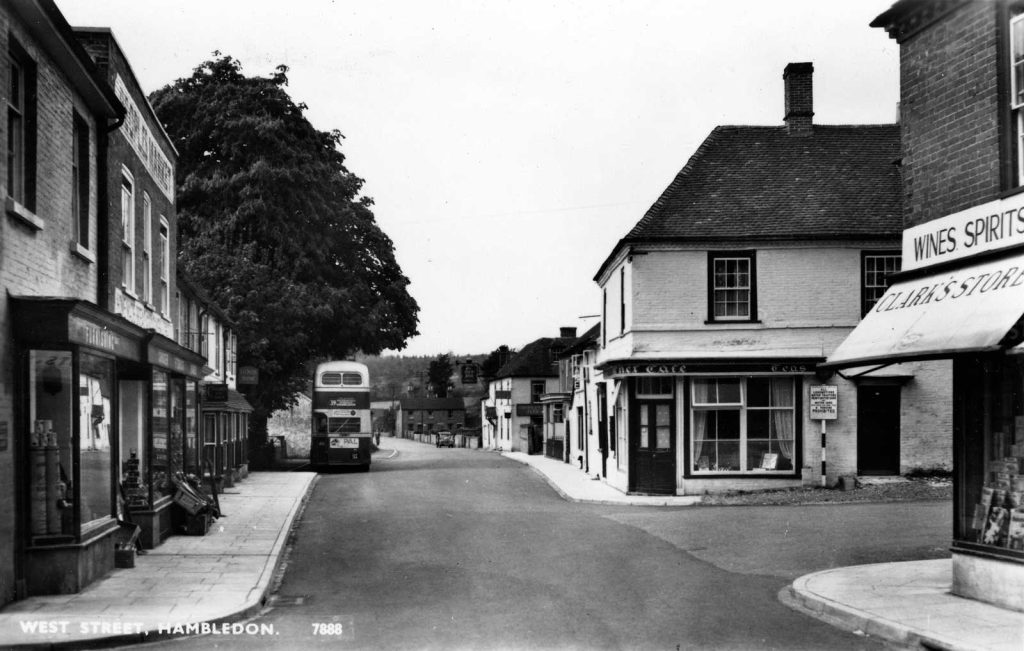
At the beginning of Lower West St, to the left on the south side is a pair of Edwardian mock tudor semi-detached homes, Downings and St Davids. In the 1930s the plot of land west of St Davids was still a vegetable garden but is now occupied by two generous sized semi-detached family homes built in the 1970s.
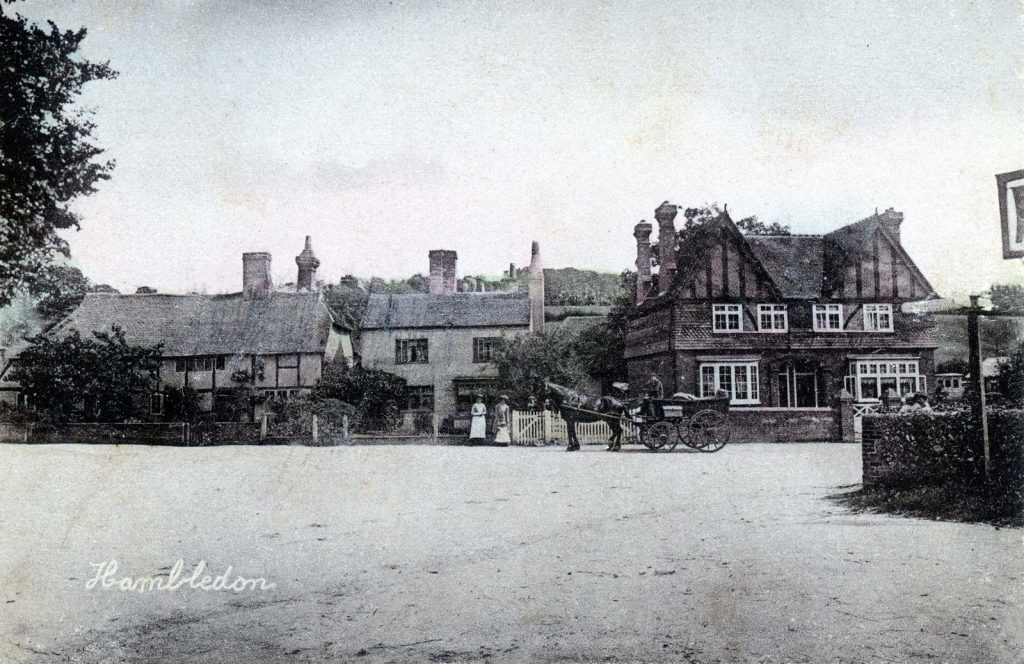
Saddlers Cottage with its legacy shop-front bay window is sited on the corner of the alley which gives access to the attached Bakery Cottage. Opposite, next to the alley is the terrace fronting on to West St that includes The Stores, Hamela Cottage and Cricketers Cottage; the latter flanked by the footpath that gives access to Speltham Down, a conserved green space now under the custody of the National Trust.
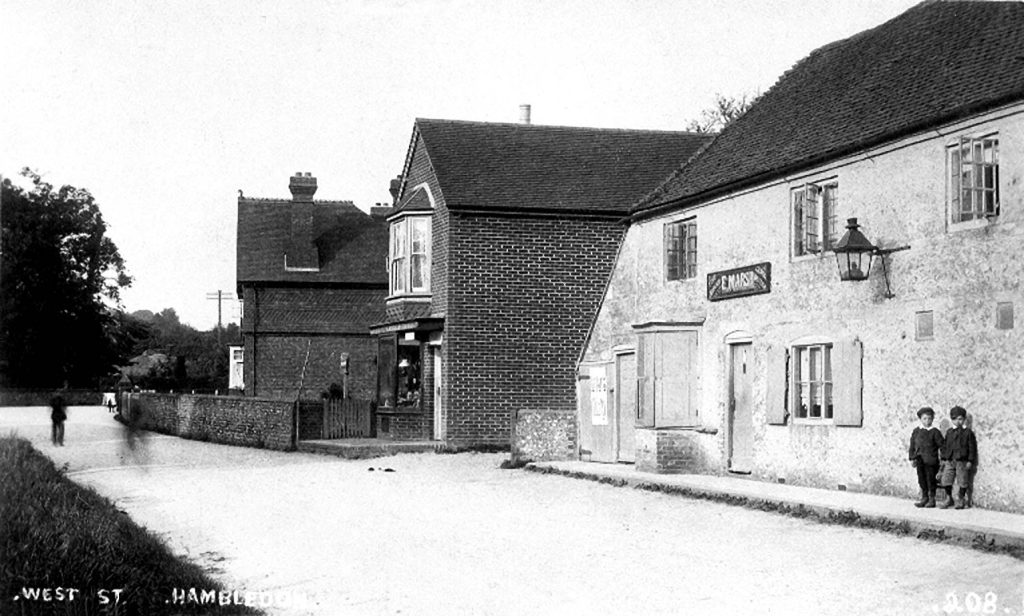
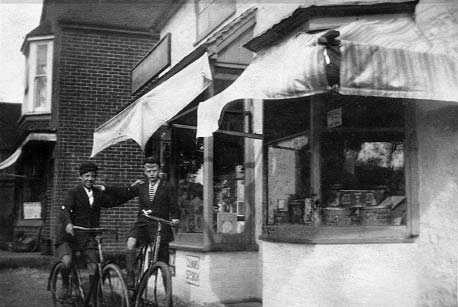
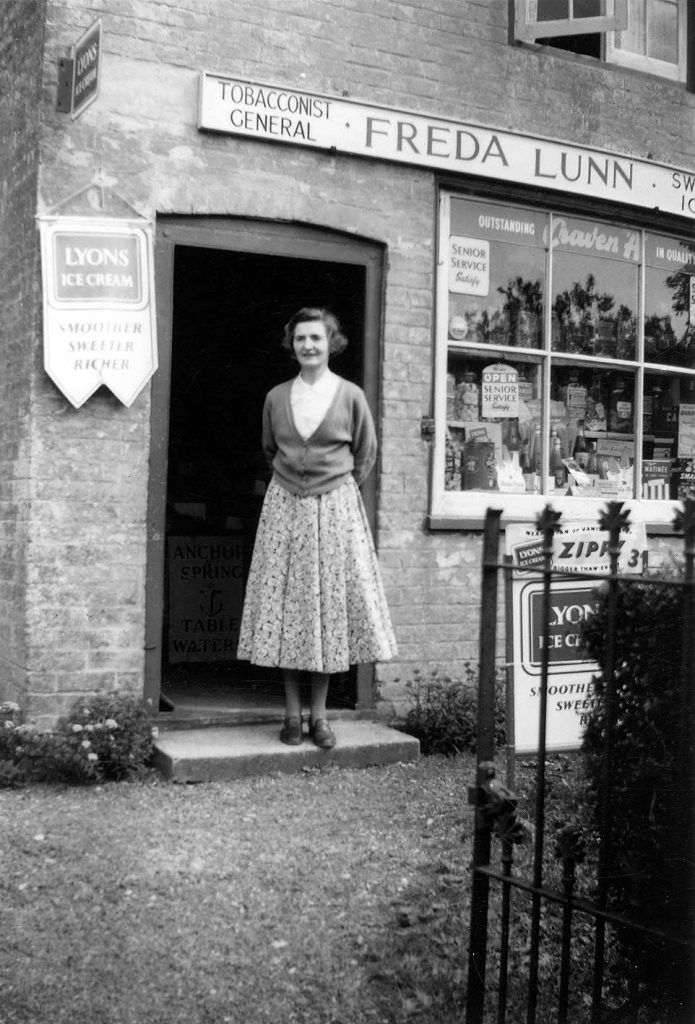
showing the changing frontage. As well as general grocery, The Stores ran a regular weekly fish stall, remembered for its characteristic odours by older villagers!
On the north side of Lower West Street the first house is The Cross Tree, a Grade II listed 17C timber-frame cottage that was originally 11 & 12 West St and is now a single residence.
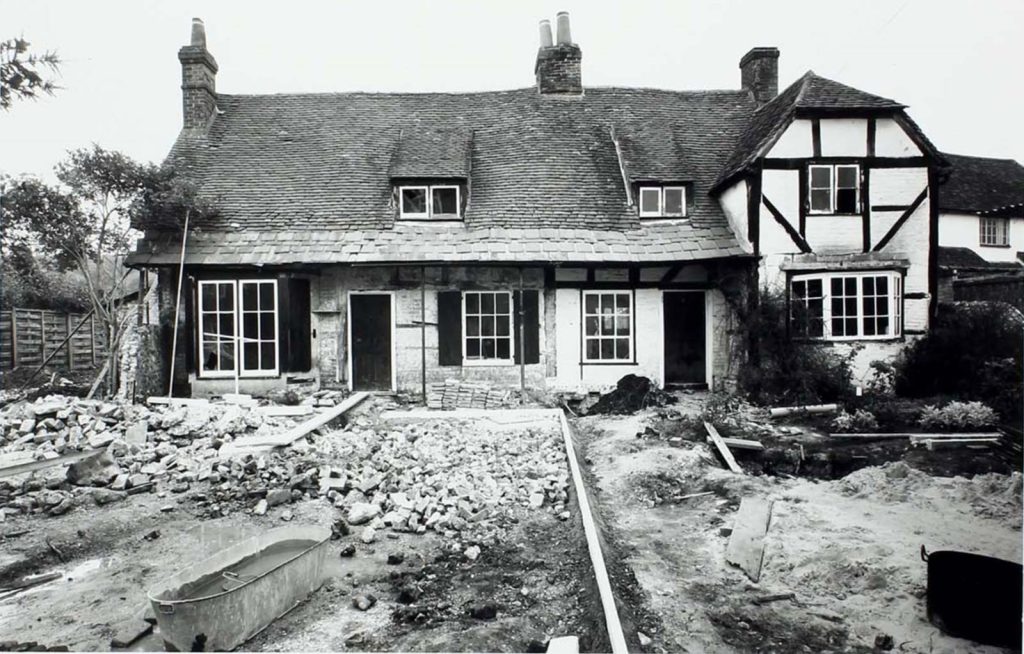
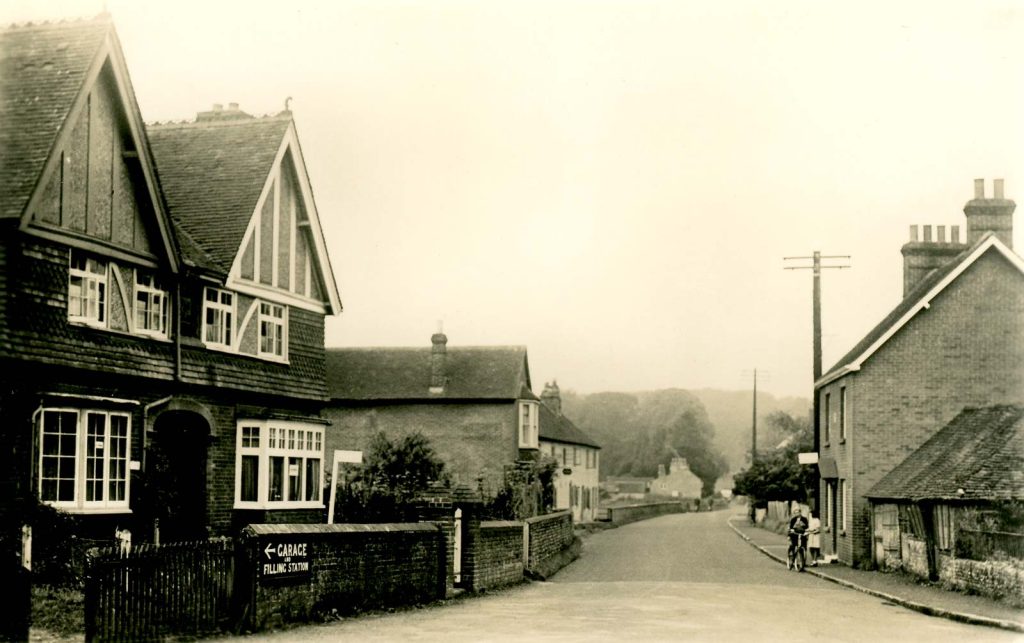
Victorian, Edwardian and modern era houses continue along the north side until Weaverlands, another listed Georgian house (Grade II) once called Alliance House when it was the residence of the owner of the Alliance Brewery until the name was changed under Hartridges’ ownership dating from 1887.
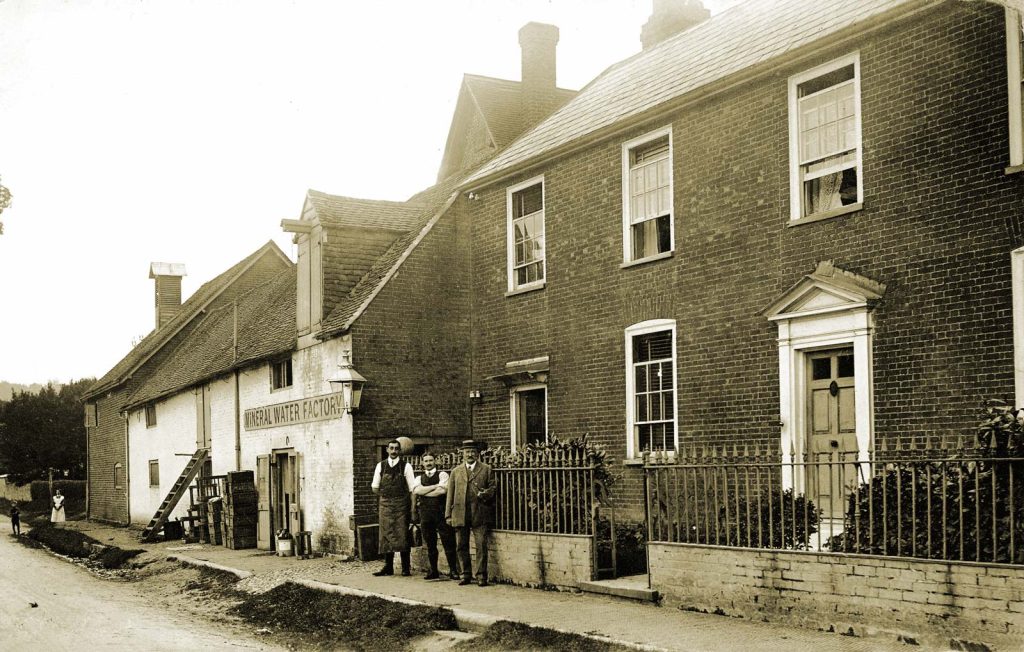
Old Barn Crescent, opposite Weaverlands, takes its name from the ancient barn that occupied the field on which 16 homes were built – at that time called council houses but now referred to as social housing. The development was built soon after WWII and like many of that period it was designed to meet the needs of a larger family who could use the generous garden for growing a proportion of their own food. 17 Old Barn Crescent is a later detached home with frontage to Lower West St.
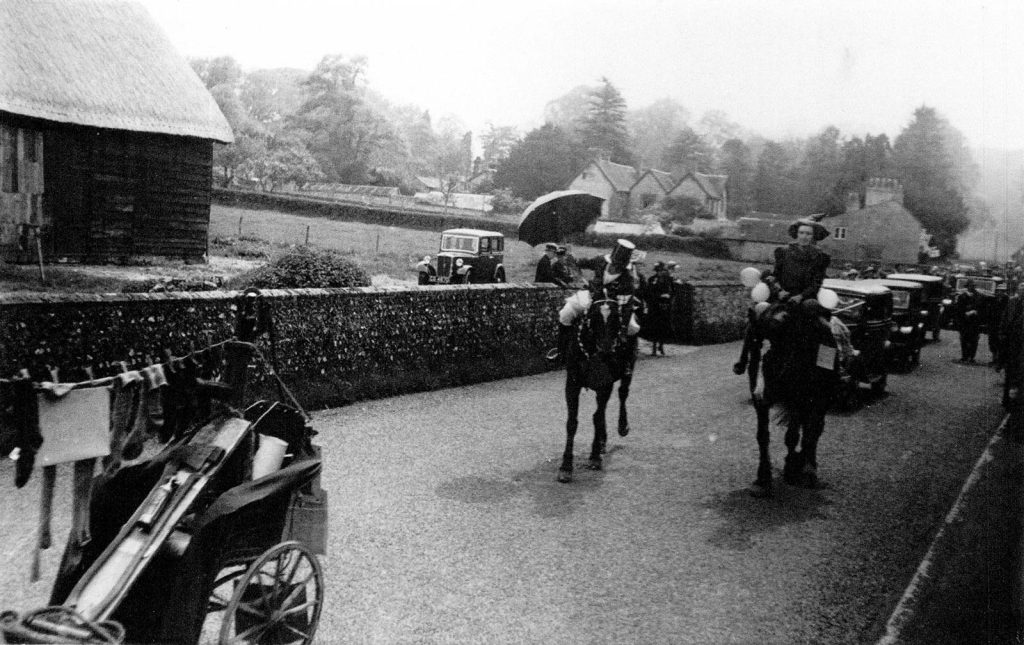
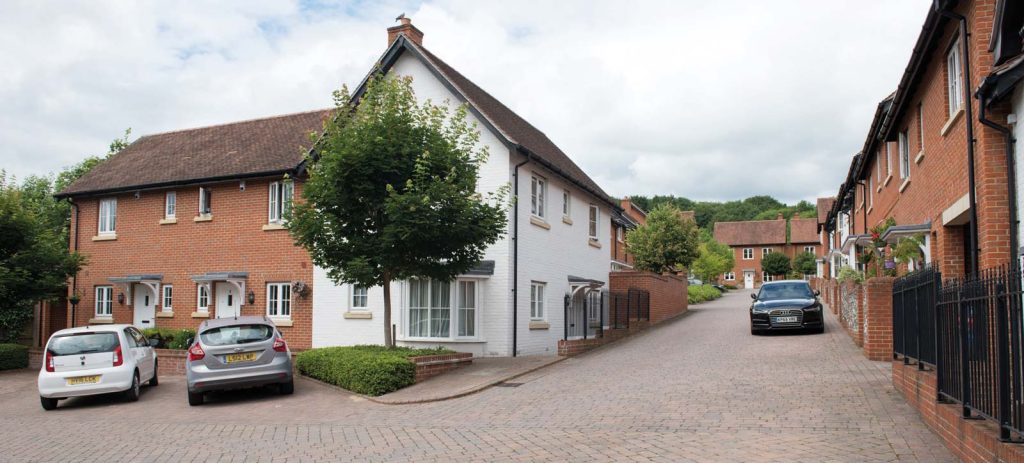
Adjacent to Weaverlands, occupying the site that once housed Alliance Brewery and more recently Hartrdges Soft Drinks factory, is The Maltings, a modern development of 29 dwellings and an office block still occupied by modern day Hartridges. The Maltings development was designed to emulate various traditional features of Hambledon’s village architecture and was completed in 2011. Nine of the homes were built as social housing for the developer’s partner Kingfisher Homes.
Further west on the north side of Lower West St is a mews style modern development of 3 attached homes and next to them the sizeable Garden House, detached and in a large garden – all sensibly built above the flood level.
The Cottage next to Garden House is Grade II listed and of mainly 18C construction: a classic English country cottage with painted brick walls and flint faced features is set in a beautifully manicured garden. Over the years it has been the home of notable Hambledon worthies. See more….
Next to The Cottage is Flint Cottage, a Victorian house adjacent to which are four modern bungalow-style detached homes.
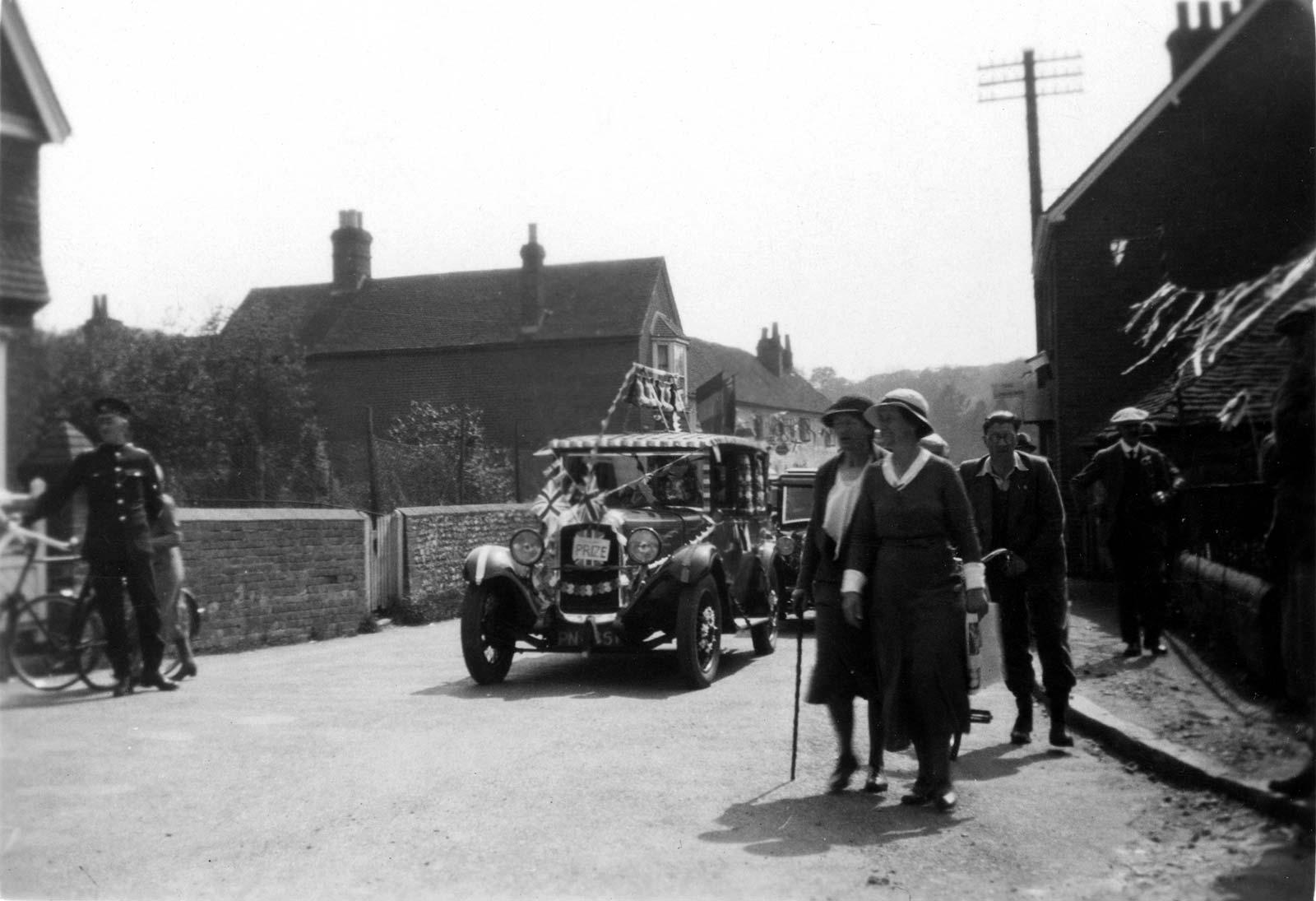
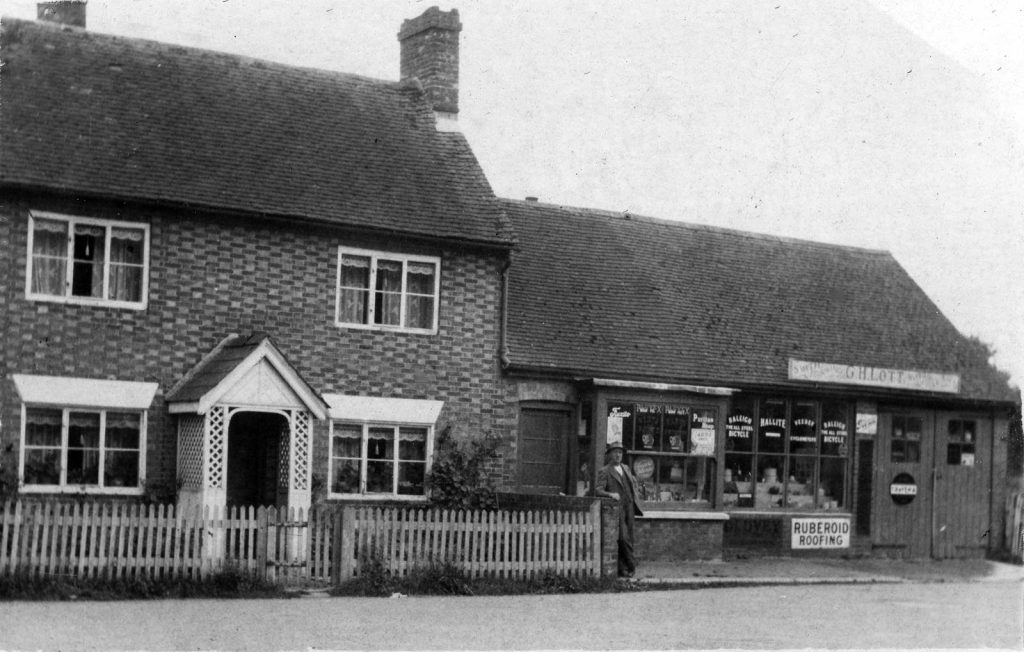
At the corner of Cams Hill and Lower West Street is the group of buildings that is usually referred to as Lotts. In the first half of the 20C it was owned by Harry Lott who kept with the times, transitioning from farrier to bike shop and general store. Currently it houses the Old Forge Tearoom, popular with walkers and wheeled visitors to Hambledon and its downland surroundings.
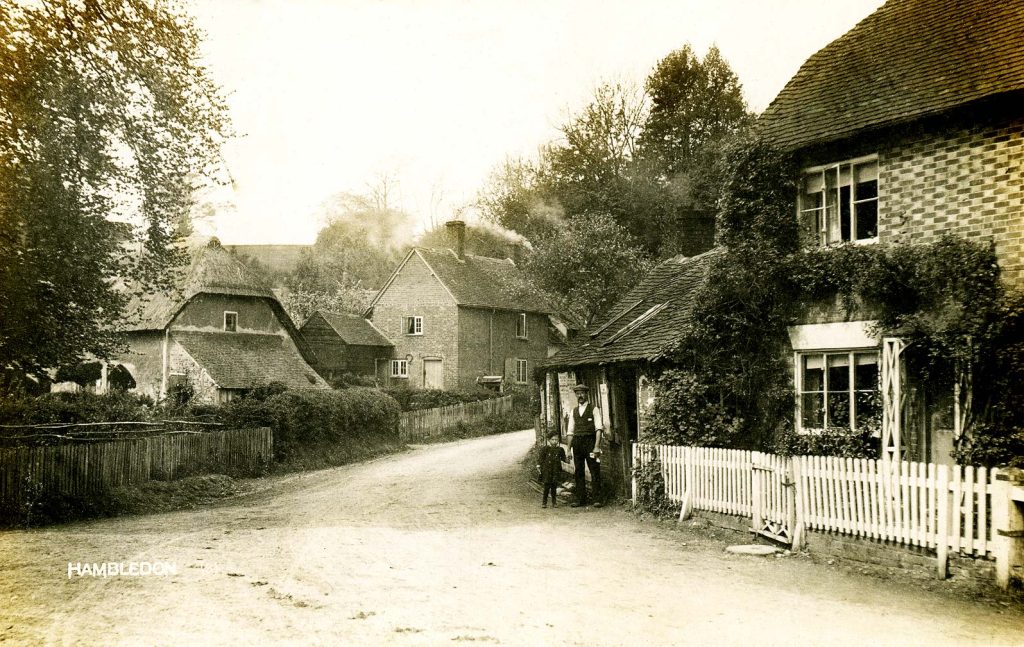
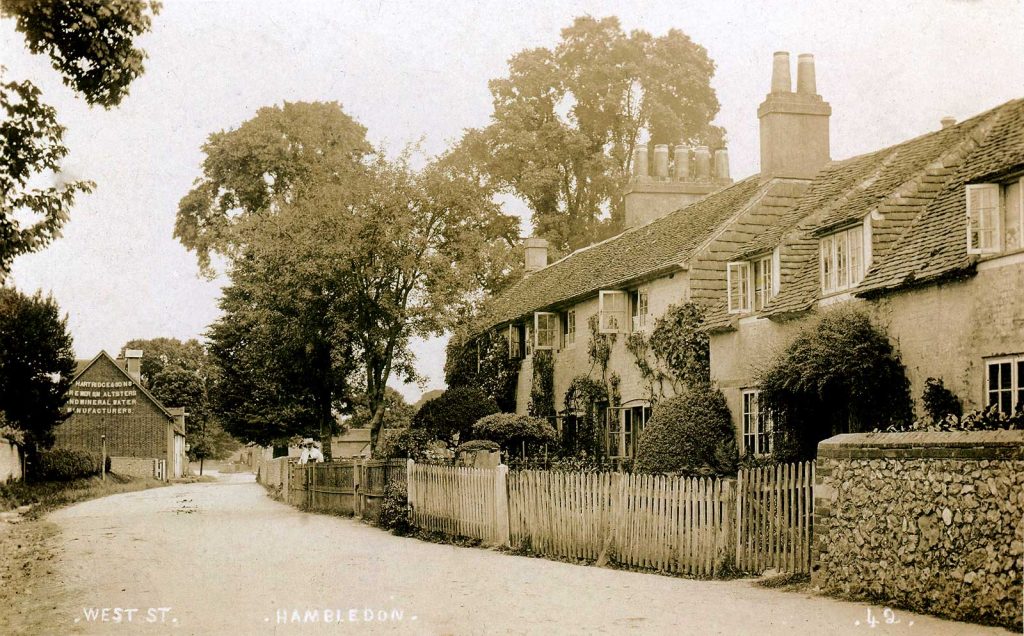
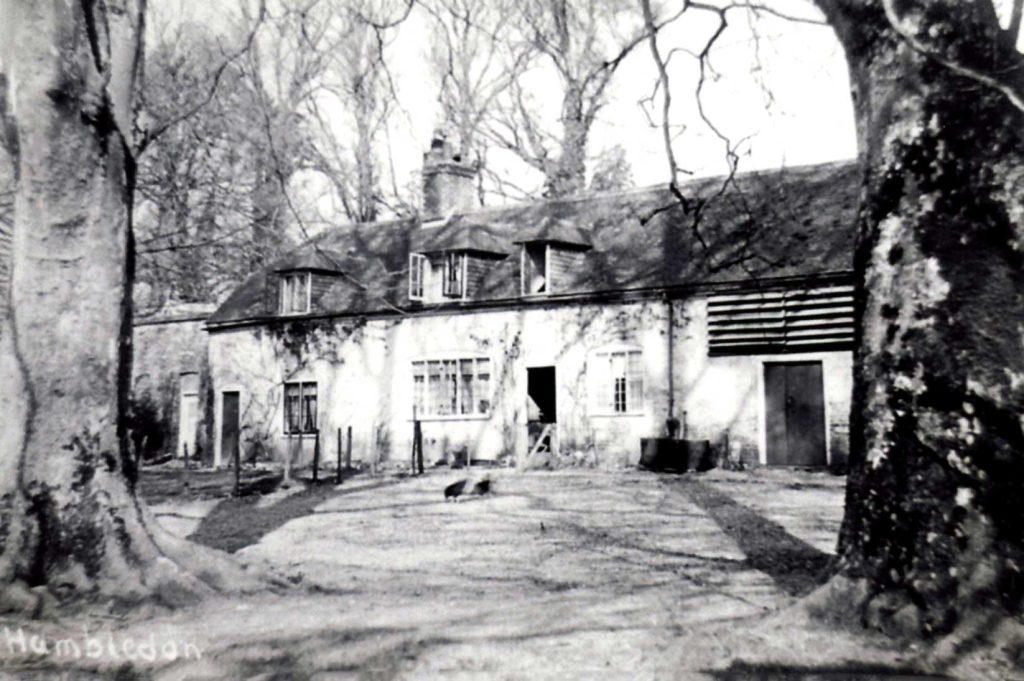
Next door to Dovetail Cottage, thick trees and foliage hide Quarry Wood a Victorian villa style house with grounds. The house was requisitioned as an officer billet in World War II. Close by, further west, approached by a separate drive, is a pair of semi-detached estate cottages – 1 & 2 Quarry Wood Cottages. These share driveway access from West Street with Barn House, a modernised individually designed detached house. Next door to Barn House is Snowdrop Cottage, an artisan home that once had wheelwright and coffin-making workshops and, true to its name, an explosion of snowdrops in the front garden usher in each spring.
Bordering Snowdrop Cottage, Bury Lodge Lane rises gently at first from West St before climbing the Down. The last building on the south side of West Street, Kings Rest, is also set back amongst trees and has a significant role in Britain’s monarchic history.
On the north side of West St, past Cams Hill, the culverted stream emerges from the great pipe that was engineered to relieve winter water table flooding; it flows into a ditch that runs alongside West St by Chestnut Meadow (once the village football pitch) and under Fareham Rd. In wet periods a stream flows along the surface of Chestnut Meadow and across the fields bounding the pumping station on Fareham Road. Hook Vinney house and outbuildings occupy a large plot at the junction of Fareham Road and was once known as Poore’s Farm. Next to Hook Vinney are Bury Lodge Cottages – a semi-detached pair in generous grounds, comfortably above the flood level.