The Middle Ages
The Normans
Domesday Book mentions only two of the holdings in Hambledon, but figures given suggest quite a prosperous community. William I seized all church lands but in about 1160 Henry II returned the Manor of Hambledon to the Bishop of Winchester. A hundred years later Henry III granted the Bishop a weekly market in Hambledon on Tuesdays. This meant a rapid growth in the prosperity of the village and can be linked with the ambitious programme of enlarging the church.
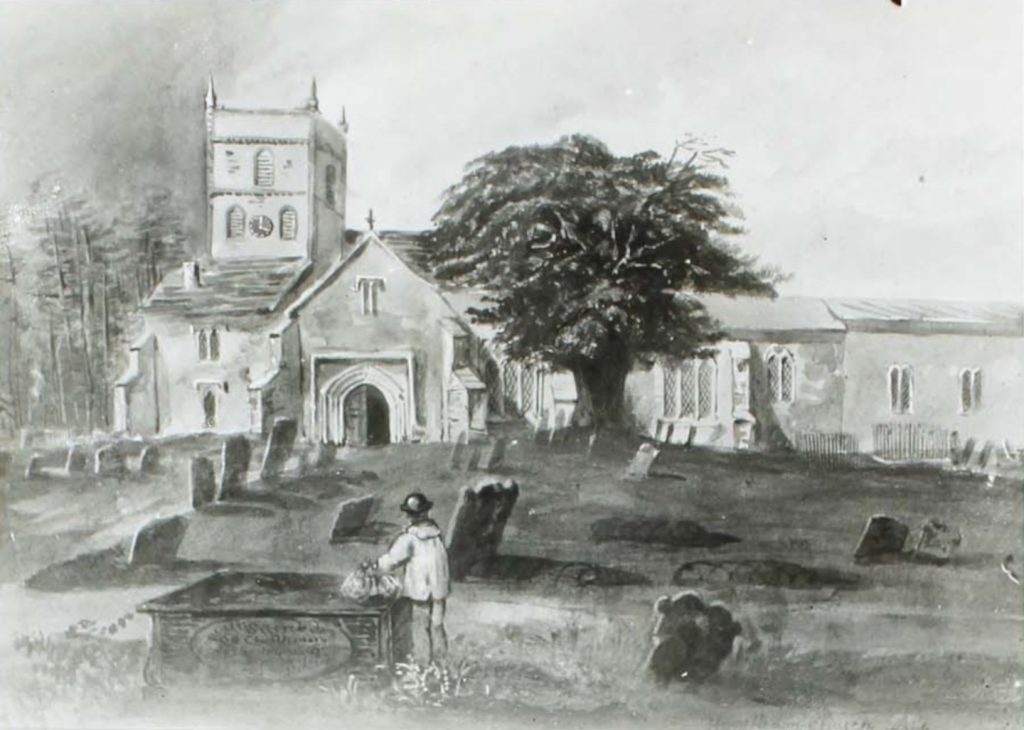
The Church of St Peter and St Paul was extended several times, first in the early 12th century. Then followed a period of expansion in the next century when in 1256 AD a grant of a weekly market decreed that Hambledon was now a Town. We know that most of the Church structure dates from this time, but, apart from Manor Farm, no other domestic architecture can be assigned to it with confidence. Manor Farm is the oldest building in the village next to the Church. It is what is known as a Hall House and when the Forest of Bere was much more widespread around Hambledon there is the possibility that the main purpose of Manor Farm house was a hunting lodge for the Bishop of Winchester. The cluster of buildings at the centre of the village would have had a very different appearance from that of today and we also speculate about the predecessor of the People’s Market when we know from church records that the market house fell down in 1819.
The Stuarts
Further expansion to the Church of St. Peter and St. Paul came when James I announced in 1612 that we could now have two Fairs every year. The letters patent were stamped with the word ‘Broadhalfpenny’ which was the toll paid to the Lord of the Manor for the setting up of booths at the Fairs.
About fifty houses have features of the 17th century hiding behind their Georgian fronts.
The village was involved in the English Civil War (1642-51) through the exploits of the ‘Hambledon Boys’, fighting for Parliament under Colonel Norton of Southwick. They distinguished themselves at the Battle of Cheriton (29th June 1644). After the battle of Worcester (3rd September 1651) and his escape by hiding in an oak tree, King Charles II who was disguised as a poor yeoman, spent the night of 13th October 1651 at the cottage adjoining the house of Mr Thomas Symonds. The cottage still stands and is now called ‘King’s Rest’. This was to be his last night in England before escaping to France and eight years as an exile.
The Eighteenth Century
Eighteenth century Hambledon suffered two fires. One in about 1725 destroyed most of the east side of the High Street. The other in 1788 destroyed the upper part of the church tower but the peal of six bells was saved. The second half of the century was the era of Hambledon’s cricket glory during which the extraordinary fortunes of the village raised cricket from a sport to an art.
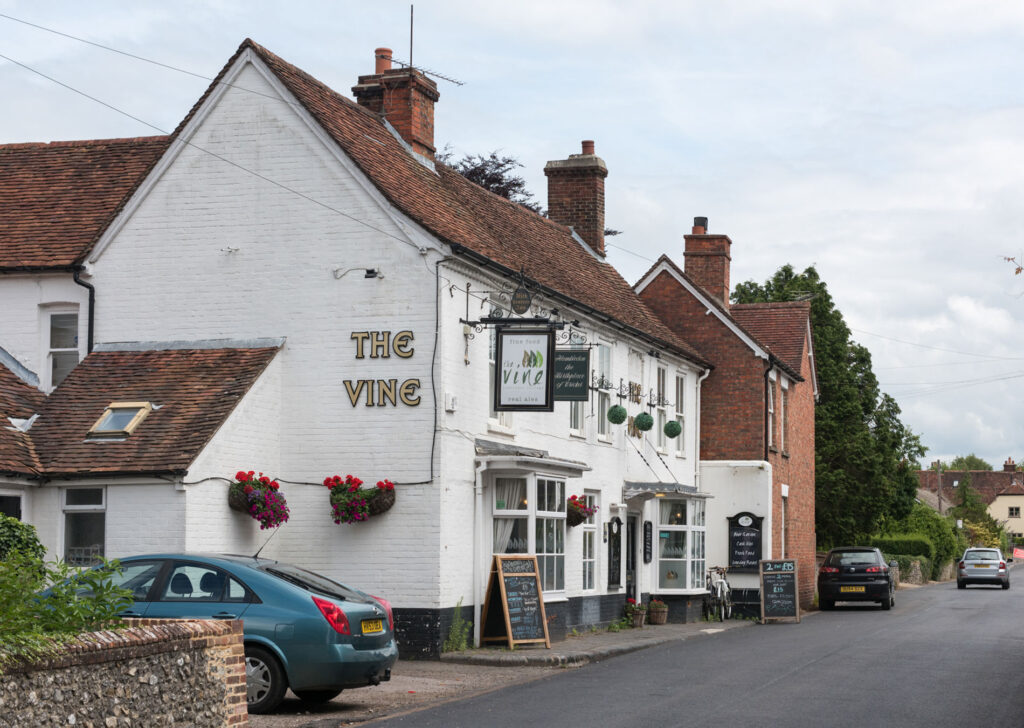
Hambledon remained sufficiently prosperous in the 18th century for many of the cottages and houses to be rebuilt or at least refaced in brick, this financed perhaps by Naval Prize Money. At this time there were up to twelve public houses in the village and surrounding area; as many as 20,000 people thronged to the cricket matches at Broadhalfpenny Down; the stage coach halt at the George Inn linked with the main coach for London and Hambledon Hunt balls were held at the George. At the turn of the 19th century, however, the growth of Portsmouth drew people away and the village shrank somewhat. Friend of local grandee John Goldsmith, William Cobbett, wrote in 1826: ‘There is now not even the name of the market left… if you go through the place you can see it was a considerable town. The Church tells you the same story; it is now a tumbledown, rubbishy place.’
The Flags of the Hambledon Volunteers, formed to repel Napoleon’s expected invasion still hang in the church today. The pull of Portsmouth and economic troubles led to some decline in the village but many businesses continued with lively trade.