Earliest Days
The first evidence of settlement at Hambledon is the Bronze Age barrows scattered around the parish; while there is little trace of their successors, the Iron Age Celts, it is worthy of note that the ramparts of Old Winchester Hill’s Iron Age fort can be seen from the high ground of Hambledon’s downs just a few hours walk distant. However by 100 AD a Roman Villa had been established and this stood near Bury Lodge. During the invasions of the 5th century the Jutes probably settled in this area, as well as the Meon valley and were knows as the Meonwara. The first mention of Hambledon is in a charter by King Edgar dated 956 granting land at Chidden.
The name Hambledon may mean ‘the homestead in the downs’ or Hamela’s Down. In Saxon days Hambledon belonged to the Abbey of St Peter, St Paul and St Swithin at Winchester.
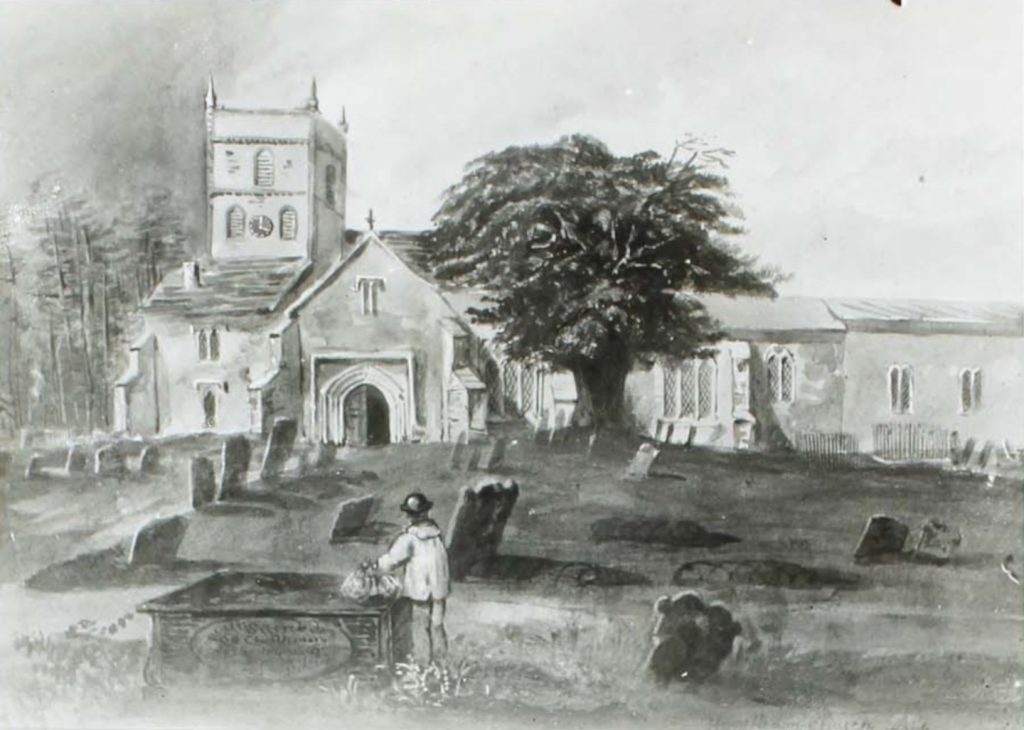
The original part of the Church of St Peter and St Paul is 11th century Saxon. There was possibly a Saxon village on the south slope above and to the east of the Church. Iron Age remains are dotted about the surrounding fields and the site of a Roman Villa is to be found close to where Bury Lodge now stands set on high ground at the southern end of the village.