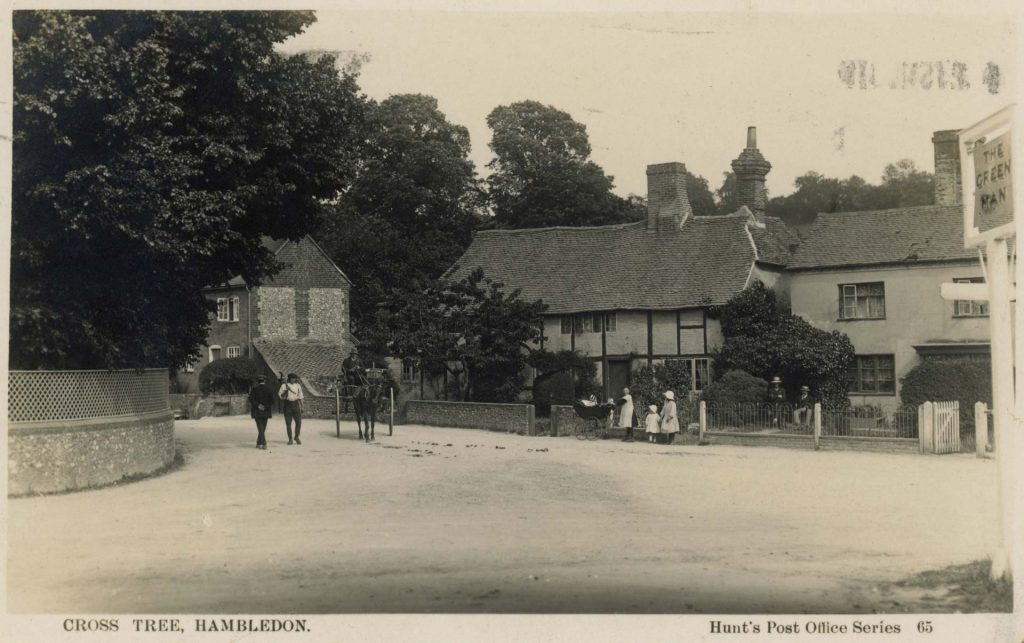
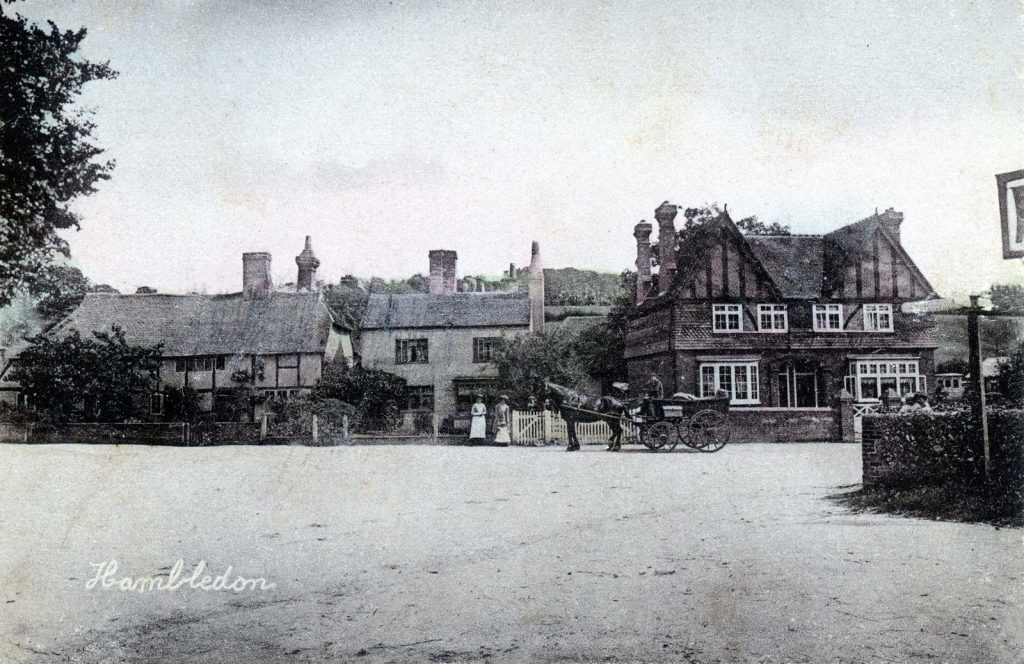
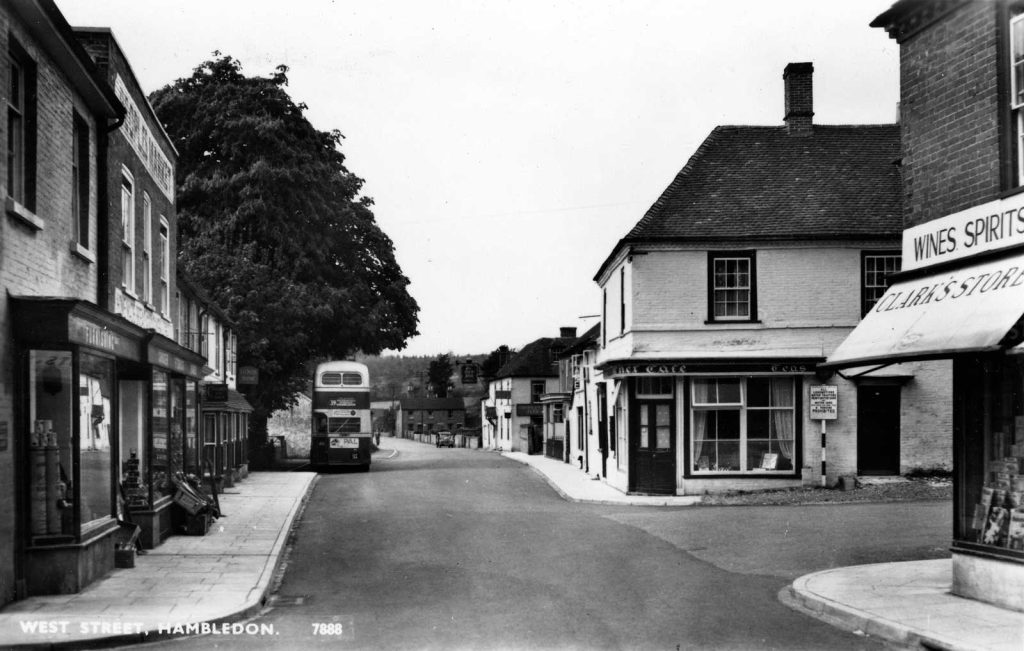
Green Lane, classified B2150, heads north northwest from its junction with West Street. The junction seems to have its own strategic or arterial importance with the siting of The Green Man public house (now a private residence) on the west side and next to it (actually on West St) The Cross Tree, once two attached cottages and now a single residence. Between these adjacent buildings a well-used footpath runs due west up to Boarhuts Copse. On the east side of the junction is a short lane, Crossways – location of two cottages. B2150 is the relatively busy connection with routes to Winchester and Alton. At Three Corners, Green Lane forks right from the main road in the direction of Chidden while the B2150 winds, with spectacular views over downland, past the site of the former Hambledon Race Course, ultimately to intersect with the A32 at Brockbridge.

Photo: The Green Man junction of Green Lane and West Street | View looking east from the Green Man towards Crossways to the right and Tudor Cottage centre. The flint wall to the left is the old boundary of Harfield House’s land. Photo dated c1910

The junction here is broad and today has built-out pavement and flowerbeds to constrict road traffic. It’s plain to see that this was a deliberately large junction; this is not easy to understand because Green Lane as it led north was originally quite narrow but was widened in 20thC when mains drainage was introduced to the village. At the NE corner now sits Hambledon Barn – converted as a private dwelling, adjacent to Harfield House which once had more substantial surrounding land that included a pond which we believe filled in winter with the winterbourne that ran down West Street. The site of the pond today is occupied by Upper Chapters which was built in the 1980s and where an important find of skilfully worked neolithic stone axes was uncovered. {read more…}

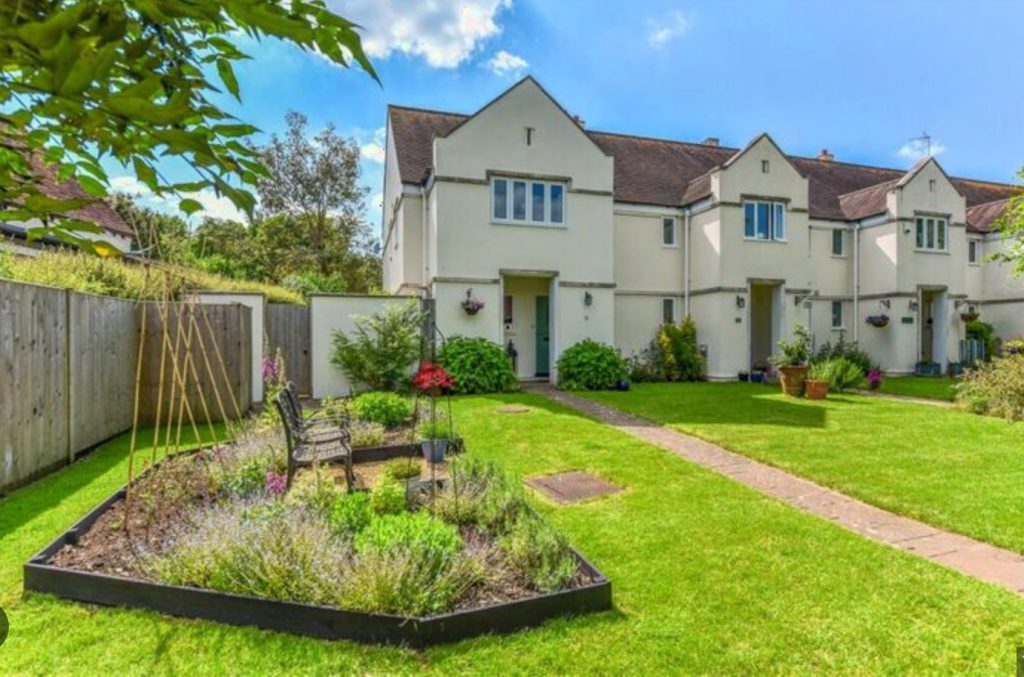
Rushmere Gate c2020 | This modern terrace of five homes has a pleasing retro design and stands apart from the predominantly 18 & 19C village architecture.

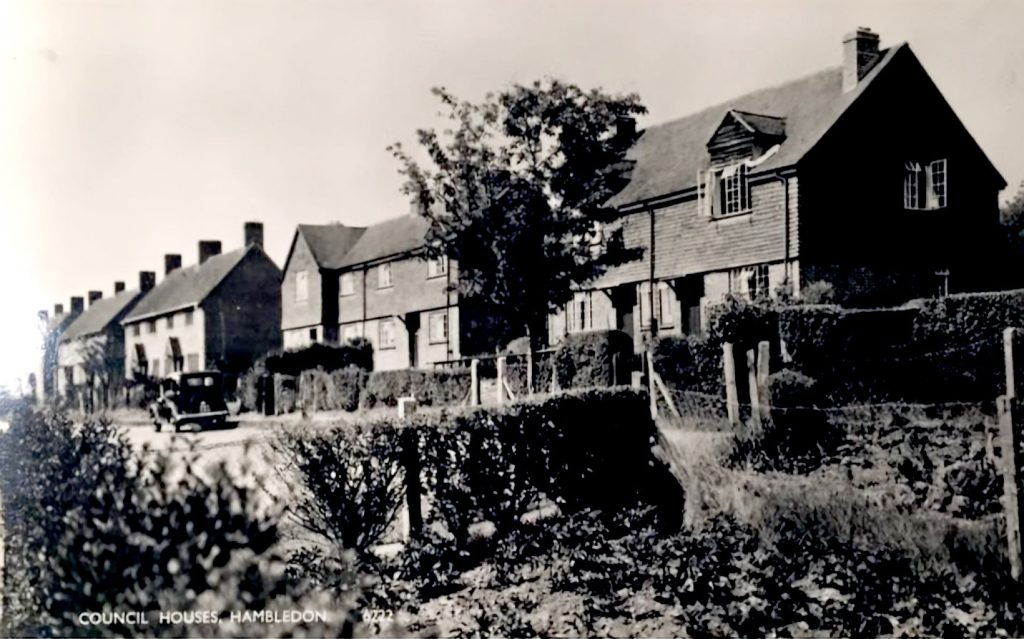
From Harfield House, moving north-northwest, the houses are of mixed age from 17C cottages to 20C housing developments Stewarts Green and Lashley Meadow on the east side and the more modern Rushmere Gate terrace of five homes on the west. Adjacent to the Methodist Chapel on the east side is another row of seven attached houses once known as The Barracks and now simply The Terrace.

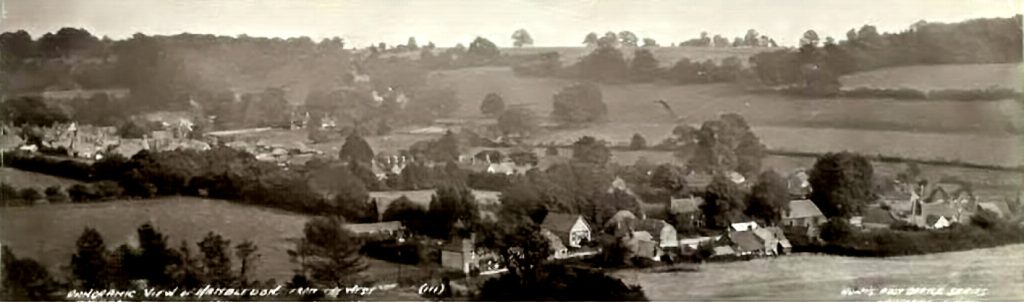
Photo: View East across Green Lane and the village centre from Headstone Copse to Speltham Hill July/Aug 1921 | The Terrace and Methodist Chapel are clearly visible while the old windmill at the top of Speltham Hill is seen in outline on the horizon. The field in the left foreground will provide the site for Stewarts Green.
Photo: Council Houses, Stewarts Green c1950

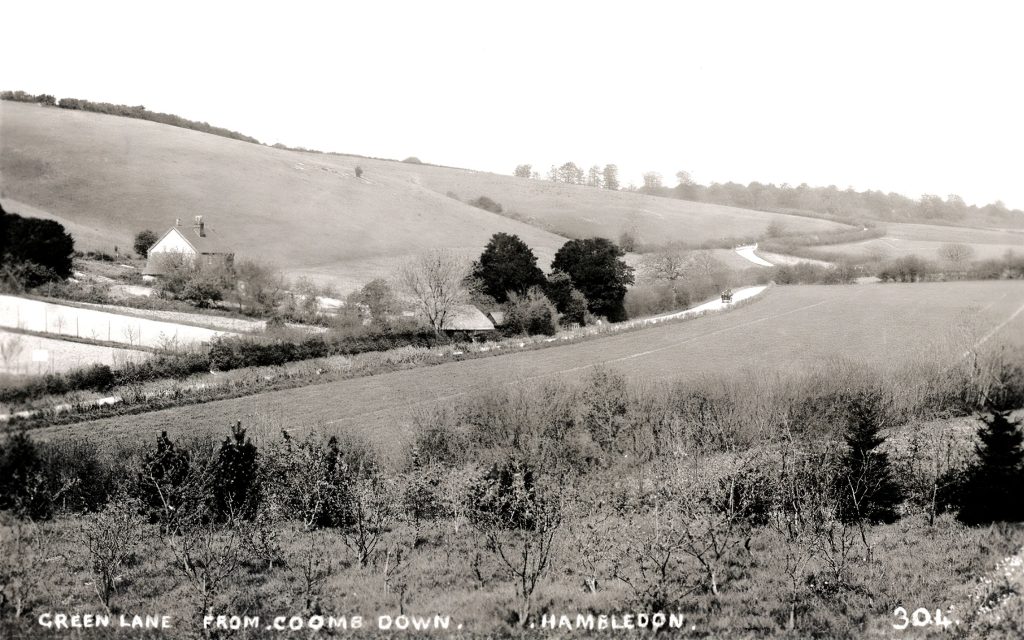
Green Lane is shortly crossed by the Wayfarers Walk footpath that descends steeply from Litheys Hanger and runs due east through Stewarts Green to the Churchyard and beyond. Green Lane continues its northerly route with Litheys Hanger to the west and much variety of housing and farmland until the fork at Three Corners where it turns north-northeast leaving the B2150 and crossing Brook Lane in the direction of Chidden. The Village boundary sign is just past Lashley Meadow and the houses along this stretch of the road are sizeable and well set back, some on the steeply rising down below Litheys. There are a few attached cottages with varying modernisation.

Photo: Green Lane from Coombe Down | View looking north west towards the junction of Green Lane and Brook Lane c.1910. Here it appears that the route of the modern B2150 has not yet been constructed at Three Corners and the bend in which Three Corners would be built is out of sight in the dip.
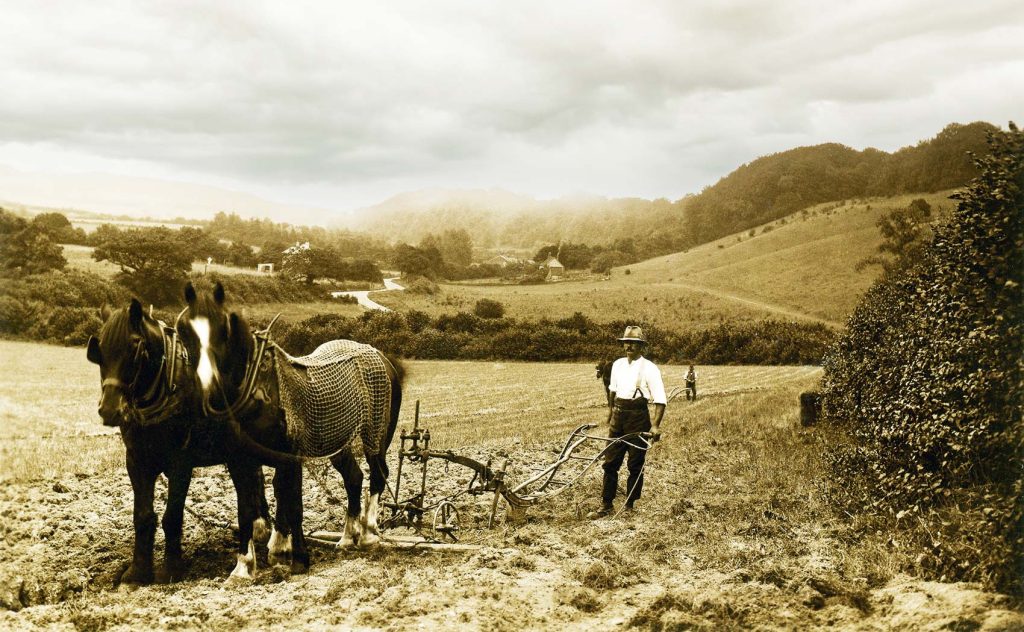
Photo: Ploughing on Coombe Down c.1900 | Another view showing the laborious working of the downland fields.

Scroll to Top